
News
A large California-based study has shown that patients with heart failure who start taking statins, compared with those who don't, will live longer and have a lower hospitalization risk regardless of cholesterol levels, presence or absence of coronary disease, and other CV drug therapies, “Heartwire” reported this week.
 November 01, 2006
News
While general endotracheal anesthesia (GETA) is the most common type of anesthesia used in infrainguinal bypasses, a study published in the November issue of the Journal of Vascular Surgery reveals that it may not be the best strategy.
November 01, 2006News
A subset analysis of diabetic patients in the SPIRIT II Clinical trial of the XIENCE V Everolimus Eluting Stent System ...
October 30, 2006Sponsored Content

Feature | Nuclear Imaging
Cardiac PET/CT represents a major advancement in cardiovascular diagnostics, offering significant clinical and ...
November 12, 2025News
Agfa HealthCare has signed a multi-million dollar deal with Thomas Memorial Hospital in South Charleston, WV and will ...
October 30, 2006News
The FDA has granted approval to Cook Inc. for its new 36mm Zenith FLEX AAA Endovascular Graft for the treatment of ...
October 30, 2006News
British researchers have concluded that counseling and education aimed at preventing coronary heart disease have no impact on mortality and little effect in terms of clinical events, reports “heartwire.” Dr Shah Ebrahim (London School of Tropical Medicine, UK) and colleagues report their findings in the Oct. 18, 2006 Cochrane Database of Systematic Reviews.
October 30, 2006Sponsored Content
Feature
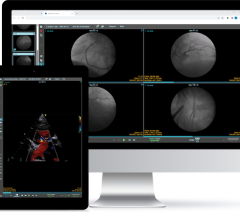
SPONSORED CONTENT — Studycast is a comprehensive imaging workflow system that allows healthcare professionals to work ...
June 17, 2025News
TeraRecon Inc. and Commissure, Inc. have announced a partnership to integrate and deliver seamless workflow ...
October 30, 2006News
Cardium Therapeutics and its subsidiary InnerCool Therapies reported on preclinical data demonstrating a new and ...
October 25, 2006News
Early clinical results from Abbott's ongoing ABSORB clinical trial, the world's first study to evaluate the safety and performance of a fully bioabsorbable drug-eluting stent platform for the treatment of coronary artery disease in humans, were presented during the 18th annual Transcatheter Cardiovascular Therapeutics (TCT) scientific symposium in Washington, D.C.
October 25, 2006Sponsored Content

Feature | Information Technology
Providing exceptional cardiovascular care for patients to achieve the best possible outcomes is the number one goal for ...
March 21, 2024News
GlaxoSmithKline and Flamel Technologies announced FDA approval of once-a-day Coreg CR (carvedilol phosphate) extended ...
October 24, 2006News
Boston Scientific Corporation announced that an independent meta-analysis of more than 3,500 patients from five clinical ...
October 24, 2006News
A stent designed to dissolve after it completes its task of propping open narrowed heart arteries is being tested by scientists. The first human experiment with the dissolving stent is being conducted with 26 patients at hospitals in New Zealand and Europe, the Associated Press reported. The study is designed to test whether the stent is safe enough to be used in larger studies.
October 24, 2006Sponsored Content

Feature | Cardiac Imaging
Cardiac positron emission tomography (PET) is growing in popularity among cardiologists because it provides the ability ...
March 05, 2024News
ev3 Inc. has announced a worldwide fracture-free guarantee in support of its new EverFlex family of stents. In the event ...
October 24, 2006News
Radiofrequency ablation is more effective than treatment with amiodarone for the prevention of atrial flutter recurrence in patients who experienced a first symptomatic episode, according to the results of a new study. In addition to the superiority of ablation over amiodarone, there was no increased risk of atrial fibrillation, even in this cohort of older patients, report investigators.
October 23, 2006News
CoreValve announced that its patented ReValving System, consisting of a 18F delivery catheter, was used to percutaneously implant its proprietary porcine pericardial-tissue bioprosthesis over the severely calcified aortic heart valve of an 89-year-old woman.
October 23, 2006