Image: Getty Images
Editor's Note: This is Part Two of a three-part series highlighting several of the presentations from the American College of Cardiology’s Annual Scientific Session (ACC.26) that took place in March in New Orleans, Louisiana.
As diagnostic angiography and percutaneous coronary intervention (PCI) expand into new areas, the results of clinical trials are starting to emerge that can guide decision-making for cardiologists and interventionalists. Of note were two clinical trials presented at the American College of Cardiology’s Annual Scientific Session in late March. One studied an FDA-approved AI-based fractional flow reserve (FFR) software, FFRangio, as a potential alternative to pressure-wire-based measurements for assessing intermediate coronary lesions. The other attempted to quantify the efficacy of PCI for patients with single-vessel chronic total occlusion (CTO).
“It’s very exciting to see this progression of knowledge in both fields,” says Sergio Waxman, MD, MBA, chief of the Division of Cardiovascular Medicine at Newark Beth Israel Medical Center (NBIMC) and director of Cardiology Strategy and Operations for RWJBarnabas Health Heart and Vascular at NBIMC, Trinitas, and Rahway hospitals. “Any new knowledge that allows us to better understand the limitations of our technology and the benefits it can bring to our patients is a welcome addition to our treasure vault of information.”
FFRANGIO is Noninferior to Pressure-Wire-Guided Strategy
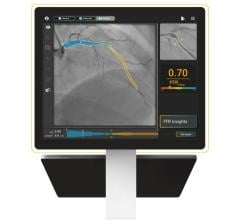
The ALL-RISE noninferiority trial included 1,930 patients undergoing coronary angiography who were found to have at least one intermediate coronary stenosis. Half were randomly assigned to physiological assessment using standard pressure-wire-based measurements. The other half received hemodynamic assessments using FFRangio, a minimally invasive software-based approach that uses AI algorithms to create a 3D model of the entire coronary tree. The results showed FFRangio was noninferior to the pressure-wire-guided strategy in respect to the endpoints of mortality, myocardial infarction, or unplanned clinically indicated coronary revascularization at one year.1
“Up until now, the traditional way of doing hemodynamic assessment of lesions, short of having a stress test, was doing pressure-wire testing, which requires intervention,” Dr. Waxman says. “You need to heparinize the patient. You need to advance a wire. In some cases, you need to give adenosine. These interventions add time and risk, even though minimal. The ability to perform hemodynamic assessment through quantitative FFR is potentially a huge breakthrough, because now we can eliminate the barriers to best practice and make lesion assessment more widely available.”
Additional Validation Required
While encouraged by the ALL-RISE trial results, Dr. Waxman cautions that more research is needed before software-driven FFR measurements become standard practice. For one, he notes, technologies like FFRangio are not yet validated for patients with heart attacks or complex lesion anatomy. Secondly, the ALL-RISE outcomes contrast with those of a prior study, FAVOR III Europe, which found that another computational method, quantitative flow ratio, was inferior to pressure-wire guidance.2
“The criticism in the European study was that there was a lot of variability in terms of how the assessments were made or how the readings were performed when compared against a core lab measurement,” Dr. Waxman says. “Maybe this has been mitigated by introducing AI or advancing the algorithms that allow us to automate some of the steps and take away that user error. These are the questions that, as the technology progresses and our curiosity grows, we’ll start answering one by one.”
CTO PCI Improves Angina Beyond Placebo
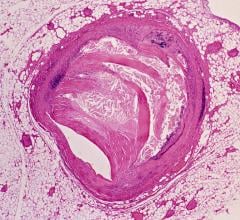
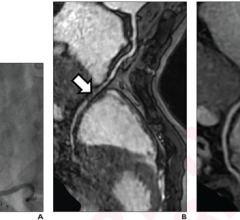
ORBITA-CTO was the first multicenter, randomized, blinded trial comparing CTO PCI with a placebo procedure. It included 50 patients with angina attributed to a single-vessel CTO. Results showed that CTO PCI led to an immediate and sustained improvement in angina symptom score, resulting in an additional 30.6 days free of angina. Improvements were also noted in frequency, physical limitations, quality of life, summary score, and Canadian Cardiovascular Society scores compared with a placebo.3
“This was a very rigorous trial, which strengthens the conclusion for this specific subgroup of patients,” Dr. Waxman says. However, he notes, additional studies need to be performed to test the viability of PCI in treating angina for patients with more complex CTO disease, which he says is more common than single-vessel CTO.
“Any CTO of higher complexity requires more than standard PCI,” he says. “I would argue that those types of interventions should only be done in dedicated centers by very experienced operators.”
References
-
Fearon WF, Jeremias A, Witberg G, et al; for the ALL-RISE Investigators. Angiography-derived fractional flow reserve to guide PCI. N Engl J Med. Published online March 29. doi:10.1056/NEJMoa2600949
-
Andersen BK, Sejr-Hansen M, Maillard L, et al. Quantitative flow ratio versus fractional flow reserve for coronary revascularisation guidance (FAVOR III Europe): A multicentre, randomised, non-inferiority trial. Lancet. 2024;404(10465):1835-1846. doi:10.1016/S0140-6736(24)02175-5
-
Khan S, Sajjad U, Fawaz S, et al. A randomized, placebo-controlled trial of chronic total occlusion percutaneous coronary intervention in stable angina — ORBITA-CTO. J Am Coll Cardiol. Published online March 29. doi:10.1016/j.jacc.2026.03.027

 October 24, 2025