May 30, 2017 — A Canadian cardiologist has published a report in the journal Eurointervention describing how he used a Canadian-invented device for the first time in the world to successfully insert a MitraClip through a patient's jugular vein rather than the femoral vein.
When Neil Fam, M.D., examined his 86-year-old patient with severe mitral regurgitation — a condition in which the blood flows backward into the heart after it contracts — his options for treating her were limited.
Because of her age and overall health, Ortensia Aceti of Sault Ste. Marie, Ont., was not a good candidate for surgery to repair her mitral valve. She had been in and out of hospital with heart failure and medication was no longer controlling her symptoms.
Instead, he decided on a catheter-based treatment to guide a MitraClip device to the heart and clamp the leaky valve. The catheter would usually be inserted through the femoral vein in the leg, but her vein was blocked.
"We were locked out, blocked from accessing her heart," said Fam, an interventional cardiologist and director of the Cardiac Intensive Care Unit of St. Michael's Hospital in Toronto.
Fam recalled a conversation he had about a year previously with Baylis Medical Co. Inc., a Canadian supplier of high-tech cardiology equipment, about one of their devices that was designed to achieve access to the heart from alternative approaches.
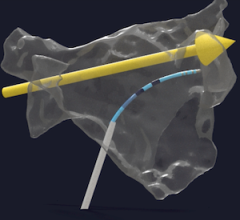
For the first time in the world, Fam successfully used the company's SupraCross RF Solution to guide a MitraClip device through the jugular vein — a more direct route to the heart — and successfully repair Aceti's leaking mitral valve.
Fam said this was possible, despite the awkward angle of the jugular vein in relation to the heart, because the tip of the sheath is steerable and the wire is equipped to deliver radiofrequency energy to puncture the septum of the heart. This allows the physician to position the system appropriately from this challenging angle and puncture the septum of the heart in a precise and controlled manner without using excessive force.
Fam said Aceti had no complications and her condition improved, allowing her to be discharged to her home. At a follow-up appointment, she was doing well with no further heart failure.
Fam said that while this procedure would be appropriate for only selected patients, they are high-risk patients for which there may be no other treatment options.
"Given the success of this procedure, the door is open for future studies of the jugular approach for treating the mitral valve," he said.
For more information: www.pcronline.com/eurointervention
 November 03, 2026