News | January 29, 2018

Coronary CT Often Misinterpreted With Higher Rates of CAD

RSNA late-breaking trial showed core lab analysis of CTA classified significantly fewer patients as having significant CAD compared to site interpretation

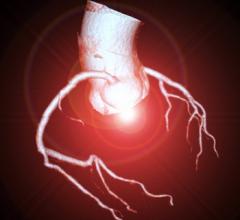
Readers of cardiac computed tomography (CT) exams often over estimate the risk if coronary artery disease (CAD) according to a new core-lab analysis from the PROMISE Trial. #RSNA17, #RSNA2017, #SCCT

Readers of cardiac computed tomography (CT) exams often over estimate the risk if coronary artery disease (CAD) according to a new core-lab analysis from the PROMISE Trial. 


January 26, 2017 — Results from a core lab analysis from the PROMISE Trial on cardiac computed tomography (CT) were among three high-impact clinical trials presented at the 2017 Radiological Society of North America (RSNA) meeting that offered radiology practice-changing clinical research.

“Core Laboratory Versus Local Site Interpretation of Coronary CT Angiography (CTA): Association with Cardiovascular Events in the PROMISE (PROspective Multicenter Imaging Study for Evaluation of Chest Pain),” presented by Michael T. Lu, M.D., and Jonathan A. Leipsic, M.D., investigates the concordance and relative prognostic value of central core laboratory versus local site interpretation for significant coronary artery disease.

In the PROMISE trial, 193 North American sites interpreted coronary CTA as part of the clinical evaluation of stable chest pain. CTA was also interpreted retrospectively by a central core lab blinded to clinical data, site interpretation, and outcomes. Concordance between core lab and site interpretation for significant CAD (greater than 50 percent luminal stenosis) was assessed.

The findings revealed that core lab interpretation of coronary CTA classified significantly fewer patients as having significant CAD compared to site interpretation, without a loss of predictive power for cardiovascular events.

This study was simultaneously published online in the journal Radiology.

RSNA highlighted two other key trials on breast imaging. One was a pivotal study of a new tool, opto-acoustic imaging, to diagnose breast masses. The other study showed how patient involvement in the decision process in cases of ductal carcinoma in situ (DCIS) influences quality of life following treatment.


Read about other Key RSNA 2017 Study Presentations, Trends and Video.

Related Content

News | CT Angiography (CTA)

Oct. 27, 2025 — At the annual Transcatheter Cardiovascular Therapeutics (TCT 2025) meeting in San Francisco, Royal ...

Home October 30, 2025
Home
News | CT Angiography (CTA)

Oct., 2025 — Elucid, an AI medical technology company focused on providing physicians with a more precise view of ...

Home October 29, 2025
Home
News | CT Angiography (CTA)

Oct. 22, 2025 — Qure has announced its latest (510) K clearance from the US Food and Drug Administration (FDA). The ...

Home October 23, 2025
Home
News | CT Angiography (CTA)

Sept. 2, 2025 — GE HealthCare recently received 510(k) clearance from the U.S. Food and Drug Administration (FDA) for ...

Home September 09, 2025
Home
News | CT Angiography (CTA)

Aug. 11, 2025 — Elucid announced that United Healthcare has updated its cardiac imaging guidelines to align with recent ...

Home August 11, 2025
Home
News | CT Angiography (CTA)

April 30, 2025 – Viz.ai, the leader in AI-powered disease detection and intelligent care coordination, has launched Viz ...

Home May 02, 2025
Home
News | CT Angiography (CTA)

May 1, 2025 — A new expert opinion document jointly released by the Society for Cardiovascular Angiography and ...

Home May 01, 2025
Home
Feature | CT Angiography (CTA) | By Melinda Taschetta-Millane

Computed Tomography (CT) continues to be a rapidly evolving technology with many new advancements, as displayed and ...

Home March 07, 2024
Home
News | CT Angiography (CTA)

January 23, 2024 — HeartFlow, Inc., a leader in non-invasive artificial intelligence (AI) precision coronary solutions ...

Home January 23, 2024
Home
News | CT Angiography (CTA)

January 11, 2024 — According to the American Journal of Roentgenology (AJR), photon-counting detector (PCD) CT with ...

Home January 11, 2024
Home
Subscribe Now