May 28, 2015 — CVRx Inc. announced that positive results from the 'Barostim Therapy for Heart Failure' randomized, controlled clinical trial were presented at the ESC-Heart Failure 2015 Annual Conference in a late-breaking trial session. Results were presented by Prof. Jochen Müller-Ehmsen, M.D., Ph.D., from Asklepios Hospital Altona in Hamburg, Germany.
Safety and efficacy results with Barostim therapy comparing patients not previously treated with cardiac resynchronization therapy to patients who continued to suffer from advanced heart failure despite prior treatment with CRT were presented. At six months in the no-CRT group, Müller-Ehmsen reported that quality of life scores improved significantly, six-minute hall walk distance and left ventricular ejection fraction increased significantly, and heart failure hospitalization days were significantly reduced in Barostim therapy patients compared to controls.
"Based on our own experience with Barostim therapy and the safety and efficacy data now published, we are very confident to offer this therapy to our heart failure patients who are still symptomatic despite receiving optimal heart failure therapy", Müller-Ehmsen said.
"Based on results of this trial we have had the good fortune of presenting the data at three late-breaking clinical trial sessions and generating two simultaneous publications over the last three months. This is unprecedented", said William Abraham, M.D., from The Ohio State University, who served on the trial's steering committee.
CVRx completed a 146-patient randomized, controlled clinical trial to determine the performance of Barostim therapy for patients suffering from chronic heart failure with advanced symptoms. Aggregate results were recently presented at the American College of Cardiology's (ACC) annual scientific session and simultaneously published in the Journal of the American College of Cardiology: Heart Failure. Barostim therapy was shown to be safe and significantly improved patient functional and exercise capability, as well as quality of life, when compared to optimal medical therapy. Barostim therapy also significantly reduced the plasma biomarkers of heart failure severity and the burden of heart failure hospitalizations in patients with heart failure.
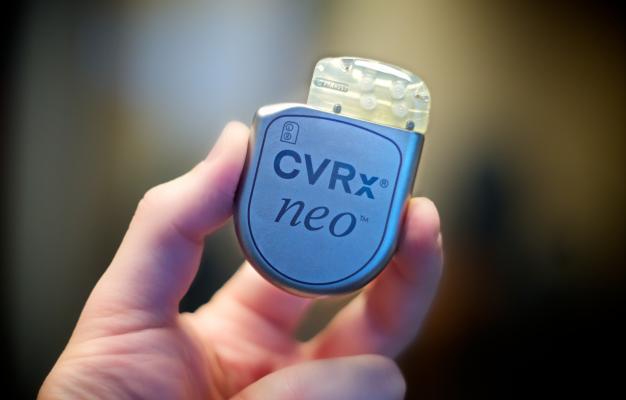
Barostim neo is a second-generation device that uses CVRx-patented technology designed to trigger the body's own natural blood flow regulation system to treat patients suffering from chronic heart failure. The therapy is also a treatment option for patients with resistant hypertension. The system electrically activates the baroreflex, the body's natural mechanism to regulate cardiovascular function. By activating this afferent pathway, Barostim therapy reduces sympathetic activity and increases parasympathetic activity, ultimately restoring sympatho-vagal balance.
Key benefits include:
- The Barostim neo can be turned on and off to demonstrate acute results;
- It can be adjusted to meet each patient's individual therapy needs;
- It is a reversible treatment, meaning the therapy can be turned off;
- It provides 100 percent adherence to treatment by continuously activating the baroreflex;
- It is compatible with and complementary to implantable cardiac rhythm management devices; and
- It is now magnetic resonance (MR)-conditional, or safe for use under specified condition in Europe.
For more information: www.cvrx.com
 September 02, 2026