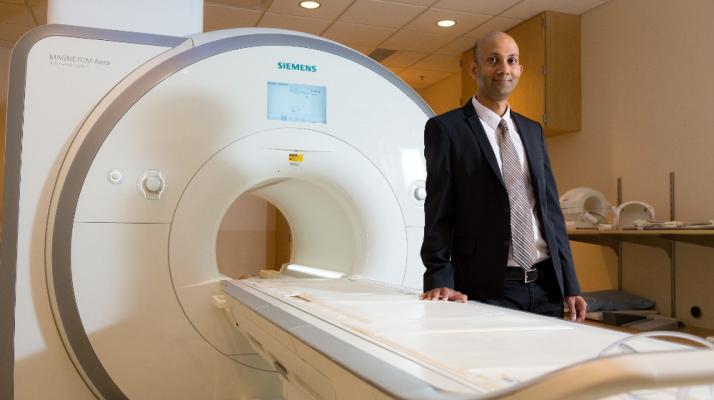
Chetan Shenoy, MBBS, MS
October 11, 2022 — Researchers from the University of Minnesota Medical School found that patients with certain features on magnetic resonance imaging (MRI) of the heart are at much higher risk for cardiac sarcoidosis-related adverse outcomes. These patients may benefit from an implantable cardioverter defibrillator. Meanwhile, other features identified patients at very low risk who might not benefit from the device. These findings were published recently in JAMA Cardiology.
Cardiac sarcoidosis is a rare inflammatory heart disease that can result in rhythm disturbances and heart failure. Sarcoidosis is estimated to affect approximately 200,000 Americans.
“Late gadolinium enhancement on cardiovascular magnetic resonance imaging is often used to diagnose cardiac sarcoidosis. Our research shows that not all patients with late gadolinium enhancement on cardiac MRI have the same risk of adverse outcomes, particularly ventricular arrhythmias,” said Chetan Shenoy, MBBS, MS, an associate professor of medicine at the University of Minnesota Medical School and the lead author of the study. “We believe our findings will help optimize the clinical care of patients with suspected cardiac sarcoidosis, and consequently, lead to better outcomes.”
In this largest study yet of suspected cardiac sarcoidosis investigated by cardiac MRI, the researchers studied 504 patients. The MRI features were based on the research team’s previously published study that described features of cardiac damage in the hearts of patients with cardiac sarcoidosis who had suddenly died or needed heart transplantation.
Researchers note that these findings should be replicated in other, more diverse, cohorts. Whether clinical management guided by these cardiac MRI features improves outcomes in patients with suspected cardiac sarcoidosis should be prospectively tested in a randomized trial.
For more information: www.med.umn.edu
Related Cardiac Sarcoidosis Content:
VIDEO: Utilization of PET For Evaluation of Cardiac Sarcoidosis
ASNC and SNMMI Release Joint Document on Diagnosis, Treatment of Cardiac Sarcoidosis
New PET-CT Scan Improves Detection in Rare Cardiac Condition
 October 19, 2026