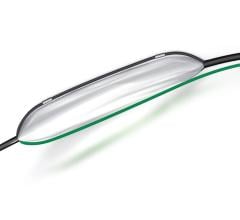
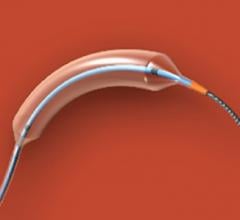
February 8, 2017 — Medtronic plc announced receipt of an investigational device exemption (IDE) from the U.S. Food and Drug Administration (FDA) to initiate a study of the IN.PACT Admiral drug-coated balloon (DCB) for a potential new indication in patients with end-stage renal disease. The randomized study will evaluate the IN.PACT Admiral DCB as a treatment for failing arteriovenous (AV) fistulas in these patients as compared to plain balloon angioplasty. The IDE approval enables Medtronic to initiate the study and gain safety and effectiveness data for the device in this investigational indication.
Globally, more than 2.5 million patients with end-stage renal disease are undergoing dialysis, a procedure that filters waste and removes extra fluid from the blood when the kidneys are no longer healthy. AV access sites are used to provide hemodialysis to patients. Over time, thickening of the vessel walls limits the ability to use a dialysis access site, requiring repeat interventions, which increase healthcare utilization and reduce quality of care. Repeated procedures are also associated with high technical failure rates and reduced quality of life for patients.2,3
"In the past, when the AV access site became narrowed, the only option was use of a standard percutaneous transluminal angioplasty (PTA) balloon to re-open and regain access for dialysis. This would often result in restenosis and high rates of reintervention," said Andrew Holden, M.D., director of interventional radiology at Auckland Hospital and associate professor of radiology at Auckland University, New Zealand. "Patients on dialysis need alternatives to help reduce and manage stenoses of their AV access sites. It is important to effectively evaluate options such as this DCB, which already has clinical evidence in patients with peripheral artery disease (PAD) in the upper leg. "
The IDE study will evaluate the safety and efficacy of the IN.PACT DCB for up to two years at approximately 30 sites in United States, Japan, and New Zealand. Principal investigators include: Holden; Robert Lookstein, M.D., professor of radiology and surgery, vice-chair of interventional services, and medical director of clinical supply chain at Mt. Sinai Healthcare System, New York; and Hiroaki Haruguchi, M.D., clinic director at Haruguchi Vascular Clinic, Tokyo, Japan. The study will aim to enroll 330 patients, with a 2:1 randomization to either treatment with IN.PACT Admiral DCB or standard balloon angioplasty. The primary efficacy endpoint is patency of dialysis fistulas through six months and the primary safety endpoint is major adverse events through 30 days. Additional endpoints include reducing access circuit related events including repeat procedures.
IN.PACT Admiral DCB received the CE (Conformité Européene) Mark in 2016 for AV access and in 2009 to treat PAD. It was approved by the U.S. Food and Drug Administration (FDA) in December 2014 for percutaneous transluminal angioplasty, after appropriate vessel preparation, of restenotic lesions with lengths up to 180 mm in superficial femoral or popliteal arteries with diameters of 4-7 mm. It is also the only DCB technology with FDA approval to treat in-stent restenosis (ISR).
For more information: www.medtronic.com
 June 13, 2024