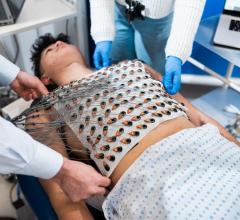
October 27, 2022 — Elite young athletes are set to benefit from a novel screening tool with the potential to change clinical practice by ruling out a serious heart condition frequently misdiagnosed. The research is thanks to a jointly led study by the Universities of Exeter and Bristol, working with rising athletes from around the world.
Cardiomyopathy, a form of heart disease in the muscle of the heart, is a genetic condition in which the walls of the heart chambers no longer develop as they would normally, taking many forms. This can lead to collapses on the pitch, or affect the heart's ability to pump blood around the body.
For one in twenty healthy adolescent athletes, training alone leads to changes in how the heart appears during ultrasound. This means diagnosing a cardiomyopathy can often be difficult, and being told there is even the suspicion of disease can lead to a huge amount of psychological distress, which often stops them taking part in training and competition until a clear decision is made.
In this large international study, more than 400 youth athletes from Manchester United Youth Academy, Football Club Barcelona, and Qatar Aspire Academy were screened using novel and non-invasive ultrasound techniques. These techniques, already used in clinical diagnosis of patients, are an important step forward in developing a new pathway to screening for cardiomyopathy in athletes. The team now hope the new techniques will reduce rates of false diagnosis, potentially saving the NHS time and resource in providing follow up tests to rule out the condition and prevent health scares.
Professor Craig Williams, Director of the Children's Health & Exercise Research Centre at the University of Exeter said: “Our results show the power of novel ultrasound techniques, when screening athletes where suspicion of cardiomyopathy has been raised, but who are otherwise perfectly healthy. The difference this makes results is more accurate cardiomyopathy diagnosis, especially in young athletes, thus better protecting the athletes of tomorrow.”
Dan Dorobantu, PhD student in cardiology at the University of Exeter, added: “Often times when screening athletes, we would see changes that could be due to a disease, but equally so because of how the heart adapts to training. Reaching a clear conclusion can involve more tests, follow-up visits, and considerable stress for the athletes. Any new technique that can help us better diagnose these cases would lead to improvements in screening, and the care we provide our athletes.”
The paper ‘The use of 2-D speckle tracking echocardiography in assessing adolescent athletes with left ventricular hypertrabeculation meeting the criteria for left ventricular non-compaction cardiomyopathy’ is published in the International Journal of Cardiology.
For more information: https://www.exeter.ac.uk/
Related Content:
VIDEO: Should Student Athletes be Screened for Sudden Cardiac Arrest?
American Medical Society for Sports Medicine Position Statement Evaluates Role of ECG in Athletic Cardiovascular Screening
Cardiac Ultrasound Studies Evaluate Impact of Exercise on Athletes' Hearts
Tackling Cardiovascular Health Risks in College Football Players
Sudden Cardiac Arrest Patient Walks to Ambulance Thanks to Wearable Defibrillator

 September 09, 2025