News | Stents Peripheral | October 01, 2015

Stentys Receives CE Mark for Self-Apposing Stent in Lower Limb Artery Disease

Trial data found paclitaxel-eluting stent successfully prevented foot amputation in 99 percent of patients treated for critical limb ischemia

Stentys, CE Mark for self-apposing stent, lower limb artery disease, below-the-knee arteries, critical limb ischemia, PES BTK-70 trial

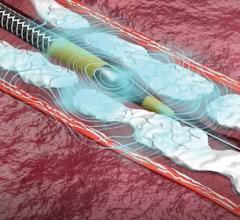
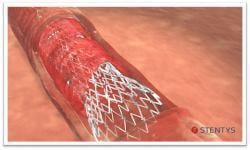
Image courtesy of Stentys


October 1, 2015 — Stentys announced that the company’s drug-eluting stent received CE Mark for treatment of below-the-knee (BTK) arteries. The approval makes it the first self-expanding and drug-eluting stent with regulatory approval in Europe for this indication.

The CE Mark was obtained following the results achieved by the device in the PES BTK-70 study in which the product prevented foot amputation in 99 percent of the 70 patients treated for critical limb ischemia (CLI).

The most severe cases of CLI, in which tissue of the foot or ankle does not receive a sufficient supply of oxygen and begins to die, often require amputation. To prevent this outcome, surgeons open up the artery with balloons and frequently implant stents. Approximately 25 percent of diabetics globally suffer from CLI and, according to the International Diabetes Foundation (IDF), the worldwide diabetic population is projected to increase from 387 million in 2014 to nearly 600 million individuals by 2035.

The PES BTK-70 trial treated 70 patients suffering from CLI of class 4 and 5 in the Rutherford scale with a Stentys paclitaxel-eluting stent from January 2012 to May 2013 in five hospitals. The primary endpoint was the 12-month primary patency rate defined as absence of restenosis (≥50 percent) or occlusion within the originally treated lesion based on angiography verified by Core Lab. At 12 months, the primary patency rate was 73 percent, freedom from target lesion revascularization was 79 percent and freedom from amputation was 99 percent.

For more information: www.stentys.com


Related Content

Feature | Cath Lab | Kyle Hardner

Since receiving FDA approval in 2016, intravascular lithotripsy (IVL) systems have grown in popularity among ...

Home November 14, 2025
Home
News | Cath Lab

Nov. 11, 2025 — FastWave Medical has successfully completed enrollment in its 30-patient coronary feasibility study and ...

Home November 13, 2025
Home
News | Cath Lab

Oct. 28, 2025 — Results from the first-of-its-kind randomized PROCTOR trial found that a strategy of saphenous vein ...

Home November 04, 2025
Home
News | Cath Lab

Oct. 27, 2025 — Results from the PREVUE-VALVE study suggest that there are currently at least 4.7 million people aged 65 ...

Home October 29, 2025
Home
News | Cath Lab

Oct. 25, 2025 — Medtronic plc has announced the launch of the Stedi Extra Support guidewire, designed to enhance ...

Home October 28, 2025
Home
News | Cath Lab

Oct. 27, 2025 — Elixir Medical, a developer of technologies to treat cardiovascular disease, has announced new clinical ...

Home October 28, 2025
Home
News | Cath Lab

Oct. 22, 2025 — Heartflow, Inc. has introduced Heartflow PCI Navigator, the newest addition to the Heartflow One ...

Home October 23, 2025
Home
News | Cath Lab

Oct. 15, 2025 — Stereotaxis recently announced it has obtained CE Mark in Europe and submitted a 510(k) application to ...

Home October 16, 2025
Home
News | Cath Lab

Oct. 7, 2025 — Medtronic has announced the full distribution of the Neuroguard IEP System (Neuroguard) after a ...

Home October 07, 2025
Home
News | Cath Lab

Sept. 22, 2025 — Nicklaus Children's Heart Institute in Miami, Florida, is now offering bedside transcatheter patent ...

Home September 23, 2025
Home
Subscribe Now