August 30, 2017 — Vascular Dynamics Inc. announced interim results of the company’s first-in-human trial of its MobiusHD implant presented in a podium presentation at the European Society of Cardiology (ESC) in Barcelona. The data showed an average reduction of ambulatory systolic blood pressure of 20 mmHg from baseline in the first 40 patients (of an anticipated 50) to reach the six-month endpoint in studies conducted in the U.S. and E.U.
These interim results of the CALM-FIM (Controlling and Lowering Blood Pressure with MobiusHD First in Man) trial provided results from the first cohort of 40 patients evaluated in the United States and Europe. The data demonstrated that at the six-month evaluation point, 88 percent of the 40-patient cohort had a greater than 10 mmHg drop in office systolic blood pressure or 5 mmHg or more in 24-hour ambulatory systolic blood pressure. Many of these patients also experienced a reduction in their use of antihypertensive medication.
"These interim data show significant promise in treating patients with resistant hypertension — that is, those who remain uncontrolled even after as many as three or more antihypertensive drugs,” said Wilko Spiering, M.D., internist-vascular medicine specialist, University Medical Center Utrecht, the Netherlands and president of the Dutch Hypertension Society, who presented the CALM-FIM data as one of the trial investigators. “Our positive experience with the MobiusHD device demonstrates the need for continued investigation in a sham-controlled setting, which is currently running in the Netherlands and is starting up in the United States, United Kingdom and Germany shortly.”
The interim results presented at the ESC conference will be followed by a study to be published in The Lancet on Sept. 1, 2017, which outlines the final results of the CALM-FIM_EU study.
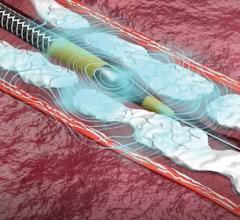
The MobiusHD System, a minimally-invasive system, capitalizes on the ability of the body’s baroreceptor mechanism to regulate blood pressure. Baroreceptors are receptors located in the carotid artery that sense blood pressure and relay that information to the brain. The MobiusHD implant is designed to amplify the signals received by the surrounding arterial baroreceptors, and thereby increase the body’s natural response to lower blood pressure through vasodilation.
In the United States, the MobiusHD Device is limited by law to investigational use only. Read the article "Vascular Dynamics to Initiate U.S. Trial for MobiusHD System for Resistant Hypertension."
Hypertension, or elevated blood pressure, is a common medical condition that currently affects 1 billion people worldwide.1 If left untreated, hypertension can cause life-threatening problems, including heart attack, aneurysm, stroke or kidney failure. Patients with hypertension can often reduce their risk factors by making lifestyle changes such as losing weight, quitting smoking and increased exercise. In cases with advanced hypertension, medical therapies may be prescribed.
Patients experiencing resistant hypertension are uncontrolled with at least three antihypertensive drugs and are at four times greater risk of cardiovascular events compared with hypertensive patients achieving blood pressure targets.2 The American Heart Association (AHA) estimates that high blood pressure costs the U.S. $46 billion each year, including the cost of healthcare services, medications to treat high blood pressure, and lost productivity.
For more information: www.vasculardynamics.com
References
1. Kearney PM, et al. Global burden of hypertension: Analysis of worldwide data. Lancet. 2005;365(9455):217-23
2. Pierdomenico SD, Lapenna D, Bucci A, et al. Cardiovascular outcome in treated hypertensive patients with responder, masked, false resistant, and true resistant hypertension. Am J Hypertens. 2005;18: 1422–8.

 August 28, 2026