October 31, 2017 — The U.S. Food and Drug Administration (FDA) issued a warning to healthcare providers that interim three-year study results from the ABSORB III pivotal clinical trial continue to show increased rates of major adverse cardiac events and stent thrombosis in patients receiving the Absorb GT1 bioresorbable vascular scaffold (BVS) compared to Abbott’s approved metallic Xience drug-eluting stent (DES). The information was delivered in an update to the March 18, 2017 letter to providers.
The FDA sent the warning letter out during the presentation of the ABSORB III trial data at the 2017 Transcatheter Cardiovascular Therapeutics (TCT) annual meeting. Data from other ABSORB trials were also presented at TCT, with an overall analysis showing the stent is technically challenging to implant, and outcomes differ depending on the experience of the operator and the techniques used to implant the device.
Watch the VIDEO “What Went Wrong With the Absorb Stent?” This is a discussion with Ajay Kirtane, M.D., SM, director of the cardiac catheterization laboratories at New York-Presbyterian Hospital/Columbia University Medical Center, on the ABSORB III 3-year outcomes and other Absorb data presented at TCT 2017.
The FDA was made aware that the manufacturer, Abbott Vascular, has stopped global sales of the Absorb GT1 Bioresorbable Vascular Scaffold as of Sept. 14, 2017. The company said low sales of the bioabsorbable stent led to the decision to stop offering the product.
The FDA’s recommendations for healthcare providers outlined in the previous letter remain unchanged. Although healthcare providers with available inventory may continue to implant the BVS — including centers participating in ongoing clinical trials — they should carefully consider its safety and effectiveness and only use it if they believe it is in the best interest of their patients. See the updated letter to healthcare providers for more information.
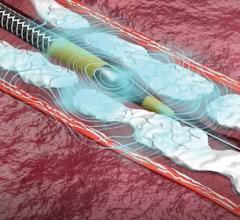
The BVS is used to open coronary arteries blocked by scar tissue (plaque) in order to increase blood flow to the heart muscle. The BVS is implanted during an angioplasty procedure. It gradually dissolves and is fully absorbed by the body over time.
The FDA recommends that healthcare providers:
- Follow the instructions for target heart vessel selection (e.g., avoiding BVS use in small heart vessels) and optimal device implantation that are included in the BVS physician labeling;
- Advise patients experiencing any new cardiac symptoms such as irregular heartbeats, chest pain or shortness of breath to seek clinical care. For more information about risks associated with the BVS, refer to the BVS physician labeling;
- Advise BVS patients to follow the recommendations for dual antiplatelet therapy (DAPT) prescribed by their healthcare providers;
- Report any adverse events related to the BVS that come to their attention. If they suspect a problem with the BVS, the FDA encourages providers to file a voluntary report through MedWatch, the FDA Safety Information and Adverse Event Reporting Program. Healthcare personnel employed by facilities that are subject to the FDA's user facility reporting requirements should follow the reporting procedures established by their facilities.
- Complete and submit the report online: www.fda.gov/MedWatch/report
- Download form or call 1-800-332-1088 to request a reporting form, then complete and return to the address on the pre-addressed form, or submit by fax to 1-800-FDA-0178
Healthcare professionals and patients are encouraged to report adverse events or side effects related to the use of these products to the FDA's MedWatch Safety Information and Adverse Event Reporting Program:
- Complete and submit the report Online: www.fda.gov/MedWatch/report
- Download form or call 1-800-332-1088 to request a reporting form, then complete and return to the address on the pre-addressed form, or submit by fax to 1-800-FDA-0178
The Absorb stent was originally hailed as a major advance forward in coronary stent technology when it received regulatory approval for commercial sales in Europe in 2011 and the United States in July 2016. However, as use of the stent expanded and new trial data revealed, it was found the scaffold has several limitations compared to metallic stents. These include delivery issues due to the thicker struts, stent recoil, the limited ability to over-expand without breaking struts, the need for very precise sizing, and poor outcomes if the Absorb is used in coronary vessels 2.5 mm or smaller. Perhaps the biggest barrier to wider adoption was the much higher price tag for Absorb over traditional metallic DES.
For more information: www.fda.gov
Related Absorb BVS Content

 August 28, 2026