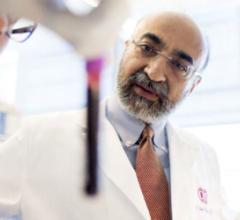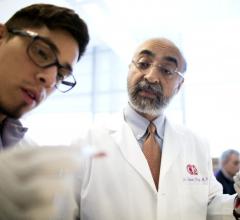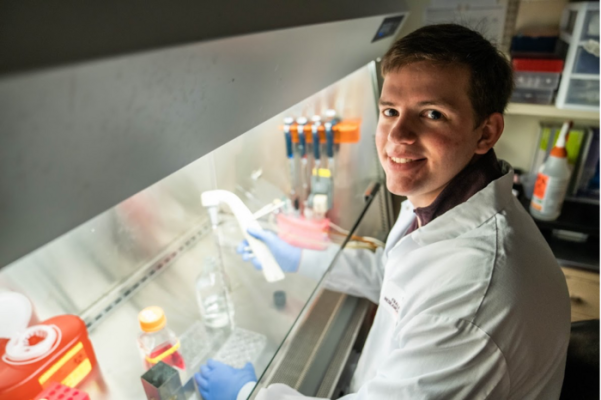
Zach Williams wanted to be a cancer researcher, but quick success in another area refocused his research on cardiovascular science. He was awarded a National Institutes of Health grant to fund his research for two years. Image courtesy of Clayton Metz/Virginia Tech.
October 13, 2022 — Zach Williams thought he’d become a cancer researcher when he joined Virginia Tech’s Translational Biology, Medicine, and Health Graduate Program three years ago.
But during a trial stint in the lab of Rob Gourdie, a cardiovascular scientist who is a professor and director of the Center for Vascular and Heart Research at the Fralin Biomedical Research Institute at VTC, Williams changed direction.
While studying a molecule the lab had designed, Williams discovered something new about the way it works. That observation could lead to new ways to treat arrythmias and reduce sudden cardiac death.
As a result, Williams has been awarded a two-year, $86,330 grant from the National Institutes of Health’s Ruth L. Kirschstein Predoctoral Individual National Research Service Award program.
Now his heart is set on advancing cardiovascular discoveries. Williams joined the Gourdie lab full time.
“Basically, I got hooked and I want to figure this out,” Williams said. “I just really enjoyed learning about heart disease and arrhythmia and the different ways that people have tried to treat those problems in the past and that what I was working on was something that nobody's done before.”
Williams is studying a specialized adhesion molecule that affects the spaces between heart cells and may contribute to a healthy heart rhythm. Arrythmias contribute to sudden cardiac death, which strikes a half-million people in the United States annually, according to the Centers for Disease Control and Prevention.
The molecule, a peptide, was initially conceived and developed by Gourdie, who is also a professor in the Department of Biomedical Engineering and Mechanics in Virginia Tech’s College of Engineering. Peptides are components of proteins. The lab took a section of a protein and recreated it synthetically.
Previous studies tested the peptide over one hour and found it had negative effects on cell adhesion and heart rhythm. Williams tried something different. He watched it for up to 48 hours and found that over that time period, the peptide had an opposite effect — a result that could potentially improve electrical conduction that affects how the heart beats while reducing arrhythmic incidents.
With the grant, Williams will test variations of the molecule, over different time periods, to try to identify a combination that could become the basis of a new therapeutic drug.
“Our ultimate hope,” Williams said, “is to find the right concentration and the right length of treatment to prevent arrhythmias and potentially even sudden cardiac death.”
For more information: www.vt.edu
 September 09, 2025