News | Stroke | January 17, 2023

RNA Will Help Treat and Diagnose Ischemic Stroke

RUDN doctors analyzed the latest research on the use of RNA for the treatment and diagnosis of ischemic stroke. And, although it is too early to talk about clinical use, one of the RNAs turned out to be both a promising biomarker and a therapeutic target 

RUDN doctors analyzed the latest research on the use of RNA for the treatment and diagnosis of ischemic stroke. And, although it is too early to talk about clinical use, one of the RNAs turned out to be both a promising biomarker and a therapeutic target

January 17, 2023 — Ischemic stroke, or cerebral infarction, ranks first in prevalence among diseases that lead to death or disability. Therefore, the search for new ways of its treatment and prevention or early diagnosis remains one of the main tasks of modern medicine. One approach is to use genetic fragments as markers or therapeutic targets. RUDN doctors analyzed the latest research in this direction and outlined the most promising approaches. 

“Ischemic stroke is one of the leading causes of disability and death worldwide. The methods used for the treatment and prevention of this pathology, despite significant progress, remain insufficiently effective. This is partly due to an incomplete understanding of the molecular mechanisms that are involved in the pathogenesis of ischemic stroke,” said Ilgiz Gareev, PhD, Senior Researcher at Institute of Neurosurgery, RUDN University 

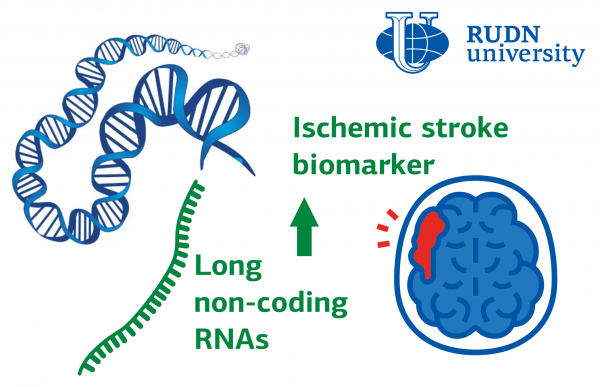
The study included 34 studies in which long non-coding RNAs were used to diagnose or treat ischemic stroke. These are single chains of nucleotides that are not involved in the production of proteins - they do not encode information about them. However, they are involved in the work of the body as signal molecules - they "report" the presence of a problem and can cause inflammation, cell death, or, conversely, the production of new cells. 

RUDN University neurosurgeons found out that one of the non-coding RNA, which is called NEAT 1 (nuclear enriched plentiful transcript 1) turned out to be the most promising for the diagnosis and treatment of ischemic stroke at the same time - it signals risks. To clarify the action of this and other RNAs, further studies are needed, both in vitro and in vivo . 

“Our analysis provides insight into the current position of non-coding RNAs in the therapy and diagnosis of ischemic stroke. Different RNAs are expressed differently in ischemic stroke, and some of them can be considered as therapeutic targets and biomarkers for early diagnosis and prognosis. However, none of the existing studies go beyond preclinical studies, and their introduction into clinical practice seems to be very premature,” said Ilgiz Gareev, PhD, Senior Researcher at Institute of Neurosurgery, RUDN University 

For more information: https://eng.rudn.ru/ 

Related Content

Feature | Heart Failure | Kyle Hardner

Editor's Note: This is Part Three of a three-part series highlighting several of the presentations from the American ...

Home May 13, 2026
Home
News | Heart Failure

May 10, 2026 — Results from the first randomized trial evaluating microRNA inhibition in heart failure were presented ...

Home May 11, 2026
Home
Feature | Heart Failure | Kyle Hardner

Could a link between the heart, brain and immune system help reduce the occurrence of heart attacks and lessen the ...

Home May 04, 2026
Home
News | Heart Failure

April 21, 2026 — Nuwellis, Inc. has announced a software update to its Aquadex SmartFlow ultrafiltration platform. The ...

Home April 23, 2026
Home
News | Heart Failure

March 28, 2026 — Amgen announced today that Repatha (evolocumab), when added to statins or other low-density lipoprotein ...

Home April 06, 2026
Home
News | Heart Failure

March 24, 2026 — New research shows that small improvements to sleep, diet quality and physical activity, made in ...

Home March 25, 2026
Home
News | Heart Failure

March 16, 2026 — Cytokinetics has announced four presentations related to Myqorzo (aficamten) at the American College of ...

Home March 16, 2026
Home
Feature | Heart Failure | Rohit Sood, MD, PhD

Cardiovascular disease (CVD) is a serious global health burden that encompasses a broad group of diseases that affect ...

Home February 12, 2026
Home
News | Heart Failure

Feb. 3, 2026 — Bristol Myers Squibb has launched "Change the Target. Change What’s Possible," an educational campaign ...

Home February 03, 2026
Home
News | Heart Failure

Jan. 27, 2026 — A new national study reveals a stark disconnect between Americans’ desire for preventive cardiac ...

Home January 27, 2026
Home
Subscribe Now