June 8, 2012 — Agfa HealthCare announced that it has selected Dell, of Round Rock, Texas, to host its cloud clinical archive portfolio, including the Imaging Clinical Information System (ICIS) platform. By extending its existing managed-services platform with the new availability of ICIS in the cloud, Agfa HealthCare is providing its U.S. customers simplified image archiving, management and viewing that supports healthcare facilities’ needs to image-enable the EMR. With this cost-effective, innovative cloud solution, Agfa HealthCare addresses the need for a comprehensive patient record. Because Agfa HealthCare provides comprehensive service and support, organizations can now focus their expertise more fully on diagnosis, treatment and care delivery.

June 7, 2012 — GE Healthcare announced the acquisition of XPRO, a Brazilian Interventional X-ray equipment manufacturer company with over 15 years of experience and with more than 120 systems installed at private customer sites. Combining XPRO’s Interventional X-Ray product capabilities with GE Healthcare’s complementary imaging technology and global distribution presence, this acquisition brings a significant enhancement of offerings in Brazil while creating a broader platform that will address access and quality challenges in emerging interventional X-ray segments. Terms of this transaction were not disclosed.

Hansen Medical Inc. received 510(k) market clearance from the U.S. Food and Drug Administration (FDA) for its Magellan Robotic System, the first robotic navigation system to more precisely guide peripheral artertery disease (PAD) interventions in the cath lab.The company will commence commercialization at selected centers in the United States immediately, with a full launch expected later in the year. 


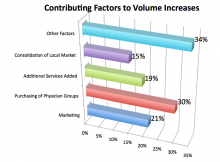
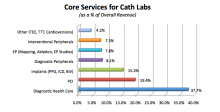
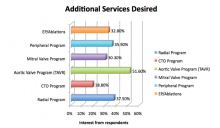
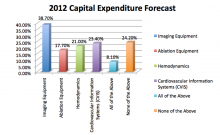
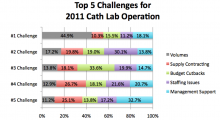
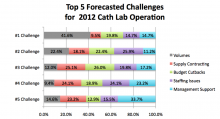
Evaluating the performance of your cath lab is key to developing a strategic plan for improving service offerings, planning growth and expanding market share to compete for revenues. Availability of services and strategic relationships with physicians groups are only part of the story. To gage trends in U.S. cath labs, Springboard HealthCare conducted an industry survey in January of 2012 to benchmark cath lab performance in areas of revenue, expenses, facility outlook and company culture. 


Current risk stratification paradigms for sudden cardiac arrest (SCA) are designed to identify high?risk populations based primarily on assessment of left ventricular ejection fraction (LVEF). However, determining the risk for an individual patient remains a significant clinical challenge, particularly since most cardiac arrests occur in those without severe left ventricular dysfunction. Microvolt T-wave alternans (MTWA) testing is a noninvasive tool that may be used to help identify underlying vulnerability to life-threatening arrhythmias.  This case presents a patient with hypertensive cardiomyopathy and moderate LV dysfunction who experienced cardiac arrest within 18 months of a positive MTWA test.


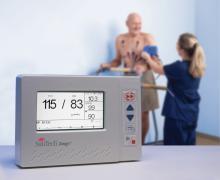
While there are plenty of automated blood pressure (BP) monitors designed to be used for clinical applications, most of these devices will not work in cardiac stress test applications. Only motion-tolerant blood pressure monitors designed specifically for handling the high noise, high motion environment of a stress lab can accurately and reliably collect BP measurements. Ideally, the BP monitor should distinguish Korotkoff sounds (K-sounds) from the large amount of background noise generated during a stress test.


Subscribe Now