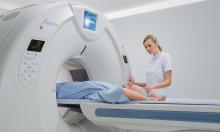
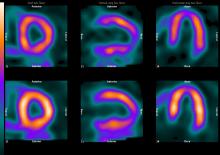
April 27, 2012 — Amidst growing concerns over healthcare costs, the Society of Nuclear Medicine (SNM) is offering a solution to help cut back on federal spending in its new report, “Imaging with CARE.” According to the report, an estimated $1.32 billion could be saved on nuclear and molecular imaging procedures over the next 10 years by taking steps to reduce the number of repeated scans due to poor quality images.

April 27, 2012 — GE Healthcare, a unit of General Electric Company, announced the U.S. Food and Drug Administration (FDA) clearance and availability of the latest version of its Vivid E9 cardiovascular ultrasound system. The Vivid E9 Breakthrough 2012 (BT12) includes a 4-D transducer for transesophageal echocardiography (TEE) and also provides innovative tools designed to help improve workflow efficiency through simplified image acquisition, intuitive navigation and advanced, yet easy to use, quantification.

April 27, 2012 – Toshiba America Medical Systems Inc. announced the FDA clearance of Adaptive Iterative Dose Reduction 3D (AIDR 3D), the company’s newest dose-reduction technology. Toshiba will offer the AIDR 3D software upgrade and related training, complimentary, to all existing Aquilion ONE, Aquilion Premium and Aquilion PRIME CT customers.


April 27, 2012 - More than 150 molecular imaging professionals gathered last week at the Society of Nuclear Medicine’s third Multimodality Cardiovascular Molecular Imaging Symposium held at the National Institutes of Health. The two and a half day symposium brought together individuals from multiple scientific disciplines—including chemistry, engineering, physics, molecular biology, cardiovascular physiology and imaging sciences—with the goal of promoting the emerging field of cardiovascular molecular imaging.


April 26, 2012 — Interventional cardiologists can and should lead efforts to improve quality, cut costs and ensure appropriate use of procedures. Elliott Fisher, M.D., MPH, professor of medicine at Dartmouth, an internationally recognized expert on variations in health system performance and one of the originators of the concept of accountable care organizations, will challenge the interventional cardiology community to accomplish these and other goals at a town hall meeting during the 2012 Scientific Sessions of the Society for Cardiovascular Angiography and Interventions (SCAI) in Las Vegas. His keynote address, “Why Interventional Cardiology Needs to be a Change Leader,” will set the stage for an interactive discussion with cardiologists attending the conference.

April 26, 2012 - The timing of treatment when someone is having a heart attack can mean the difference between life and death. To help save lives, the American Heart Association and the Society of Chest Pain Centers joined forces in September 2011 to improve the care of patients suffering from the most deadly type of heart attack, known as an ST-Elevation Myocardial Infarction (STEMI). The American Heart Association’s Mission: Lifeline Heart Attack Referring/Receiving Center Accreditation program recognizes hospitals for their ability to quickly and appropriately treat heart attack patients.


April 24, 2012 — The secondary cancer risk from multi-detector computed tomography (MDCT) scans is low among older adults, according to a study from Stanford University in the April issue of the Journal of the American College of Radiology.


April 24, 2012 - Boston Scientific Corp. announces CE mark and European market launch of the Emerge PTCA Dilatation Catheter. The Emerge catheter is a next-generation pre-dilatation balloon catheter designed specifically to offer exceptional deliverability to address challenging lesions. The company plans to launch the product immediately in CE mark countries in both monorail and over-the-wire (OTW) options. Commercial availability is expected in the United States and additional international markets later this year.

Subscribe Now