September 22, 2011 — Stentys S.A., a medical technology company commercializing a self-apposing stent to treat acute myocardial infarction (AMI), announced it has enrolled the 500-patient target of the international APPOSITION III study for its Self-Apposing Stent.

September 22, 2011 — The 15th annual scientific meeting of the Heart Failure Society of America (HFSA) will feature a session titled "Cancer Chemotherapy and Cardiotoxicity" moderated by Daniel J. Lenihan, M.D., professor of medicine at Vanderbilt University. It will focus on the effect of cancer drugs on the presence of heart failure and how oncologists and cardiologists have developed close collaboration in order to benefit patients.

September 22, 2011 — Half the people who have atrial fibrillation deny or don’t know they have a higher risk for stroke, according to a new American Heart Association survey.

I repeatedly hear two competing, contradictory themes discussed at every symposia – the need to lower healthcare costs and that costs to bring new technology to market are rapidly increasing. The U.S. leadership position as a medical technological innovator is slipping to Europe, where there is a much wider selection of devices to choose from. The requirements to gain CE mark clearance are much more lenient than U.S. Food and Drug Administration (FDA) pre-market approval.  

I repeatedly hear two competing, contradictory themes discussed at every symposia – the need to lower healthcare costs and that costs to bring new technology to market are rapidly increasing. The U.S. leadership position as a medical technological innovator is slipping to Europe, where there is a much wider selection of devices to choose from. The requirements to gain CE mark clearance are much more lenient than U.S. Food and Drug Administration (FDA) pre-market approval.


New developments in drug-eluting stents, such as biodegradable materials and bifurcated stents, are expected to prompt an increase in market value. Companies like Biosensors and Abbott are developing biodegradable and bifurcated stents to deal with concerns about thrombosis caused by long-term device implantation and to expand the type of treatable lesions, including those located at vessel branches.


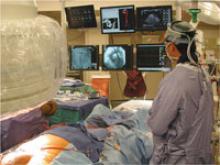
The space needed and costs involved to create a hybrid operating room (OR) for a specific speciality may not be feasible, especially at mid-sized hospitals. This was the case at Middlesex Hospital in Middletown, Conn., where the facility wanted to increase procedural volume, but needed to upgrade its small operating rooms for vascular, endovascular, laparoscopic and endoscopic procedures.


One of the biggest trends is the creation of hybrid operating rooms (ORs) that bring together the best of both surgical and interventional technologies. They are centered around a high-quality angiographic X-ray imaging system, allowing new collaborative treatment strategies and new types of procedures. Users say the shift to hybrid ORs is more than a change of venue for procedures, it is a paradigm shift in medicine.


Subscribe Now