Training physicians, especially cardiac specialists, has taken on an increasingly critical role. With more cardiologists, cardiovascular surgeons and vascular surgeons interpreting CT data, the need for proper training has increased exponentially in recent years.

ZOLL Medical Corp. has announced it is now shipping all models of the ZOLL M Series defibrillator that comply with 2005 AHA/ERC Guidelines.

Designed to speed cardiovascular workflow and help enhance patient care, the Xcelera R2.1 integrates examination results from key cardiology subspecialties, including interventional cardiology, cardiovascular ultrasound, ECG, nuclear cardiology, cardiac CT, cardiac MR and electrophysiology.

Siemens Medical Solutions’ ACUSON Antares ultrasound system, premium edition, features shared service cardiology applications in addition to the complete range of general imaging and advanced clinical applications such as 3-D/4-D and contrast agent imaging. With its enhanced imaging performance, the system enables physicians to better view disease, even with the most technically difficult-to-image patients.
The system’s platform builds upon advanced workflow and diagnostic capabilities with several innovative features to adapt to today's changing healthcare environments.

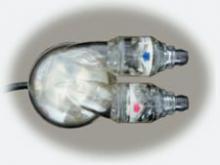
A guide wire-based occlusion device, the GuardDOG by Possis Medical enables physicians to quickly and effectively manage local blood flow while employing interventional techniques and devices to treat vascular disease. It features a 0.035-inch diameter guide wire, preferred for peripheral interventions, and a soft, compliant, CO2-filled balloon providing quick inflation and deflation.

Cordis Corp. has received approval from the FDA to market its PRECISE Nitinol Stent and ANGIOGUARD Emboli Capture guide wire. The system is used to treat carotid artery disease in patients at high risk for adverse events from carotid endarterectomy (CEA) — a surgical procedure for removing arterial plaque from the carotid artery.

The integration of Volcano’s intravascular ultrasound imaging (IVUS) capabilities into GE Healthcare’s Innova all-digital X-ray cath lab imaging system creates a digital cardiovascular imaging system designed to give a clearer view of coronary and peripheral vessel morphology in a more accessible manner than previously available.


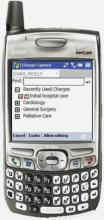
The emergence of ultra portable computing technology and the availability of new communication modalities such as Wi-Fi have taken the practice of medicine to a new level. Allowing healthcare professionals to remotely access information not only at the point of care, but also outside the hospital improves efficiencies. Physicians no longer necessarily need to be by the bedside in order to diagnose and treat patients.


If its cancer care, emergency medicine, pediatric and maternal-fetal medicine specialties keep Robert Wood Johnson University Hospital (RWJUH) in New Brunswick at the forefront of nationally recognized hospitals, its heart center is what keeps it pumping.


An old alliterative says that prior planning prevents poor performance. This is particularly true for cardiology practices considering the adoption of electronic medical record (EMR) technology, according to a speaker at the Towards the Electronic Patient Record (TEPR) conference in Baltimore [in May].
"You need a detailed knowledge of who you are, what you do, and how you do it," said Michael Mytych, principal of Health Information Consulting in Milwaukee, who presented his strategy for cardiac EMR implementation at the meeting.
Cardiac Cartography


Subscribe Now