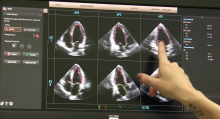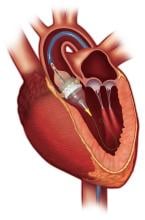
Abbott announced CE Mark of the TactiCath Contact Force Ablation Catheter, Sensor Enabled, developed to make it easier for physicians to more effectively treat atrial fibrillation (AF). When integrated with Abbott's EnSite Precision cardiac mapping system, physicians are able to utilize dual impedance and magnetic technologies to help more precisely model the heart. This integrated system also helps physicians determine where to apply optimal contact force (pressure) when creating a lesion during a cardiac ablation to correct a heart rhythm abnormality. The Sensor Enabled technology allows physicians to create a more detailed heart model during ablation procedures than a catheter without a sensor.

Biotronik announced the availability of the first U.S. Food and Drug Administration (FDA)-approved cardiac rhythm management (CRM) devices with technology that automatically recognizes when a patient enters a magnetic resonance imaging (MRI) environment.

Biotronik announced U.S. Food and Drug Administration (FDA) approval and the launch of Sentus ProMRI, the thinnest quadripolar left ventricular lead available in the United States. This introduction completes Biotronik's second-generation ProMRI lead portfolio, which also includes Solia ProMRI and Plexa ProMRI.

May 9, 2017 — The U.S. Food and Drug Administration (FDA) has cleared Boston Scientific’s Resonate family of implantable cardioverter defibrillator (ICD) and cardiac resynchronization therapy defibrillator (CRT-D) systems. The approval includes new features in the Resonate devices including SmartCRT technology with multisite pacing capability for multi-electrode pacing, and compatibility with the HeartLogic Heart Failure Diagnostic Service to help physicians improve heart failure (HF) management.

May 9, 2017 — The first patient has been enrolled in the U.S. Food and Drug Administration (FDA) approved prospective feasibility study, STEMI Door-to-Unloading (DTU) with Abiomed Impella CP percutaneous ventricular assist (pVAD) system in acute myocardial infarction.

May 9, 2017 — A manuscript by physicians from Mayo Clinic and Harvard Brigham & Women's Hospital entitled, “Initial Experience with the BioSig Pure EP Signal Recording System: An Animal Laboratory Experience,” was published in The Journal of Innovations in Cardiac Rhythm Management (JICRM), April 2017 issue. Read the article by clicking here.


May 11, 2017 — A new study shows that the Apple Watch's heart rate sensor, when paired with an artificial intelligence-based algorithm, can detect a serious and often symptomless heart arrhythmia, atrial fibrillation (AF or aFib). The new research uses a deep neural network based on photoplethysmographic (PPG) sensors commonly found in smart watches. 


May 11, 2017 — A new study shows that the use of a wearable cardioverter defibrillator (WCD) is safe and effective in treating ventricular arrhythmias for pediatric patients who are at risk for sudden cardiac death (SCD). The study represents the largest pediatric patient population to date when evaluating the WCD as a therapy option. The findings of the study were presented at Heart Rhythm 2017, the Heart Rhythm’s 38th Annual Scientific Sessions.


May 12, 2017 – A new study found that dementia rates increase with delays in starting anticoagulation treatment for atrial fibrillation (AFib or AF). The large study included more than 76,230 AF patients with no prior history of dementia that were treated with an antiplatelet or warfarin. The results were presented at Heart Rhythm 2017, the Heart Rhythm Society’s 38th Annual Scientific Sessions, and show that warfarin, in particular, can increase the risk of dementia long-term.


Subscribe Now