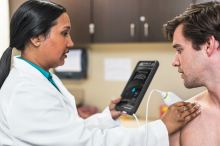
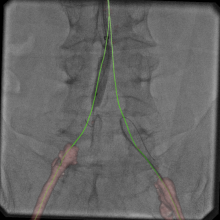
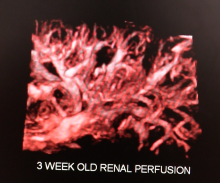
Merit Medical Systems Inc. and its ThinkRadial education program now offers a new vascular training model at events throughout the world.

Kopp Development Inc. announced the release of the new accessory for their latest magnetic resonance imaging (MRI) entryway system, FerrAlert Ferromagnetic Incident Log Manager (FILM). This logging device was designed specifically with The New Joint Commission standards in mind. In addition, it is a great tool to assist with internal root cause analyses, according to the company.

Philips announced its collaboration with UCHealth, an integrated delivery network of five hospitals in Colorado and more than 100 ambulatory locations across three states, to consolidate and standardize UCHealth’s electronic health records (EHR), voice recognition systems and PACS onto specialized platforms for radiology and cardiology.

GE Healthcare’s Molecular Imaging business will showcase the Discovery IQ positron emission tomography/computed tomography (PET/CT) platform at this year’s Radiological Society of North America (RSNA) annual meeting, delivering both outstanding image quality and intelligent quantitation.


We are approaching 20 years since the introduction of endoscopic vein-graft harvesting (EVH) as a method of vessel harvesting for coronary artery bypass grafting (CABG), and two decades and more than 2 million procedures have justified EVH as the standard of care. Patients experience faster recoveries, better clinical outcomes and enhanced satisfaction. This is a review of the benefits and ongoing advances in the technology.

Endoscopic Vein-graft Harvesting


November 16, 2015 — At the Radiological Society of North America (RSNA) 2015 annual meeting, GE Healthcare will unveil the next generation of its Logiq E9 general imaging ultrasound system. The system combines the power of XDclear probes with a new XDclear 2.0 platform that maximizes spatial and contrast resolution. As a result, XDclear 2.0 optimizes the imaging from the pulse of the probe to each of its pixels and every step in between.


One-third of ischemic strokes are classified as cryptogenic. The classic risk factors for stroke are usually absent, such as cardio-embolism or large artery atherosclerosis. In the United States, about 200,000 strokes without a known cause occur annually, according to the American Stroke Association (ASA). What’s even more striking is that a recent American Heart Association (AHA) survey revealed more than half of U.S. physicians admit being uncertain about the best approaches to finding the underlying causes of cryptogenic strokes. 


At this year’s Radiological Society of North America (RSNA) annual meeting, GE Healthcare is showcasing continued advancements in magnetic resonance imaging (MRI) technologies. In the spirit of GE MR’s Continuum strategy, the company will showcase advanced applications as well as the Signa Pioneer 3.0T, Signa Explorer and Signa Creator 1.5T MRI scanners.

A new study appearing in STEM CELLS Translational Medicine (SCTM) describes a highly efficient, protein-based method for turning fibroblasts — the most common cells in connective tissue — into cardiac progenitor cells (CPCs). The results could lead to a much-needed new source of cells for regenerating the heart. Equally exciting is that the technology also converts the fibroblasts directly to CPCs, skipping an in-between and significantly speeding up the process.

Subscribe Now