Heart failure patients had a significantly lower chance of being readmitted within 30 days of discharge when treated with a cardiac resynchronization therapy device (CRT) equipped with an algorithm to automatically deliver and adjust therapy, according to a recent study in JACC: Heart Failure. The study compared these patients to those receiving the standard CRT optimized with echocardiography.

Direct Flow Medical Inc. received Investigational Device Exemption (IDE) approval from the U.S. Food and Drug Administration (FDA) in April to broaden its SALUS Trial. The expansion includes the addition of high-risk patients and randomization against a commercial device, the Medtronic CoreValve.

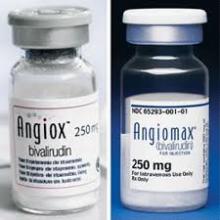
The Medicines Company announced the U.S. Court of Appeals for the Federal Circuit Court has ruled against the company in its bivalirudin (Angiomax) patent litigation with Hospira Inc.


St. Jude Medical and Thoratec announced that the boards of directors of both companies have unanimously approved a definitive agreement under which St. Jude Medical will acquire all of the outstanding shares of Thoratec. The agreement sets the price for $63.50 per share in a cash transaction valued at approximately $3.4 billion, net of cash acquired.


The recent U.S. Food and Drug Administration (FDA) approvals of two next-generation transcatheter aortic valve replacements (TAVR) devices will transform the U.S. market for TAVR procedures over the next decade, according to an analyst with research and consulting firm GlobalData.

Two companion papers published in Academic Emergency Medicine  address the question of when it is appropriate to discharge patients experiencing a potentially fatal blood clot. The studies particularly focus on patients presenting with low-risk deep vein thrombosis (DVT) or pulmonary embolism (PE).

Insulin resistance affects tens of millions of Americans and is a big risk factor for heart disease. Yet, some people with the condition never develop heart disease, while some experience moderate coronary blockages. Others, though, get severe atherosclerosis – multiple blockages and deterioration of coronary arteries characterized by thick, hard, plaque-ridden arterial walls. Researchers at the University of North Carolina (UNC) School of Medicine created a first-of-its-kind animal model to pinpoint two biomarkers that are elevated in the most severe form of coronary disease.

Subscribe Now