May 2, 2017 — The U.S. Food and Drug Administration (FDA) granted 510(k) clearance for the Teleflex Inc. AC3 Optimus Intra-Aortic Balloon Pump (IABP). The device helps augment a weakened heart’s ability to pump blood. This includes a broad range of patients, including those not previously considered candidates for IABP therapy. Clinicians may use the pump on patients with the most severe arrhythmias or with heart rates as high as 200 beats per minute.[1,2]
The AC3 Optimus has a third-generation AutoPilot Mode, which uses proprietary algorithms to address key clinical challenges and to simplify the delivery of IABP therapy.[3] In AutoPilot Mode, the AC3 Optimus automatically adjusts timing and triggering parameters, freeing clinicians to focus on the patient rather than the pump. In addition, the AC3 Optimus includes several exclusive algorithms, such as WAVE Inflation timing, deflation timing management, and best signal analysis, which optimize key functions of the IABP to deliver therapy to the most challenging patients.
“The AC3 Optimus global launch marks a major milestone for Teleflex. This highly anticipated launch will enable the company to become a more significant player with a product that can enhance patient outcomes and make it easier for clinicians to deliver IABP therapy,” said Liam Kelly, president and chief operating officer at Teleflex.
The AC3 Optimus will be launched at two key scientific meetings in May. In North America, it will be on display at the American Association for Thoracic Surgery and American Society of ExtraCorporeal Technology (AATS/AmSECT) annual meeting April 29 - May 3 in Boston. Additionally, it will be on display at the EuroPCR 2017 Conference May 16-19 in Paris, France.
The device has received its CE mark and has launched in India and parts of Europe.
IABP Operation
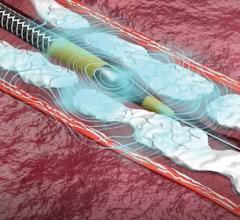
In IABP therapy, a physician inserts an intra-aortic balloon catheter into an artery, and using X-ray or imaging, advances the catheter into the aorta. The console, connected to the catheter, controls the inflation and deflation of the balloon.
The AC3 Series IABP system provides counter-pulsation therapy to adult patients with impaired left ventricular (LV) Function. It provides hemodynamic support of blood pressure and reduced cardiac work through volume displacement principles. The IABP is attached to an IAB (intra-aortic balloon) catheter which is inserted into the femoral artery and positioned in the descending thoracic aorta.
The IABP delivers helium (HE) into the IAB during diastole to displace blood above and below the IAB, increasing blood pressure and perfusion to organs close to the IAB catheter. The IABP deflates or removes HE from the IAB just prior to or in the early phase of systole, reducing the pressure in the aorta and therefore the pressure the LV must generate to open the aortic valve and eject its contents into the circulatory system. This results in a decrease in work and oxygen demand.
For more information: teleflex.com
Look at a comparison chart of IABPs on the U.S. market. A log in is required, but only takes a minute and is free.
References:
1. Schreuder J, Castiglioni A, Donelli A, et al. Automatic intraaortic balloon pump timing using an intra beat dicrotic notch prediction algorithm. Ann Thorac Surg. 2005;79(3):1017-1022. Study sponsored by Teleflex. http://www.annalsthoracicsurgery.org/article/S0003-4975(04)01641-8/abstract
2. Donelli A, Jansen JRC, Hoeksel B, et al. Performance of a real-time dicrotic notch detection and prediction algorithm in arrhythmic human aortic pressure signals. J Clin Monit. 2002;17(3-4):181-185. Study sponsored by Teleflex. https://link.springer.com/article/10.1023/A:1020737232676
3. Torracca, L. Overcoming electro-surgical inference in IABP therapy with the combined use of AutoPilot and FiberOptix IAB sensor signal. 2007. (case report, data on file). Study sponsored by Teleflex.

 August 28, 2026