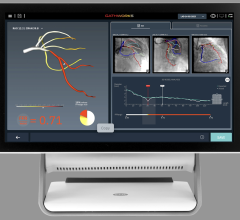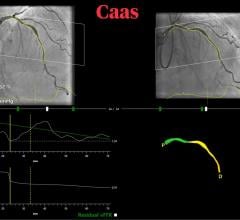
Aug. 28, 2026 — Heartflow, Inc. has announced late-breaking one-year results from an independent randomized clinical trial proving the Heartflow FFRCT Analysis safely and significantly reduced unnecessary invasive heart procedures by 44% (p < 0.001).
Presented as Late-Breaking Science at the European Society of Cardiology (ESC) Congress 2026, Fusion trial, funded by the Dutch National Health Care Institute, demonstrates that standard coronary computed tomography angiography (CCTA) alone drives overutilization of invasive catheterizations.1 By adding Heartflow FFRCT Analysis to standard CCTA scans, clinicians dramatically reduced diagnostic catheter lab procedures. The Fusion study has been published simultaneously in the Journal of the American College of Cardiology (JACC).
CCTA is the primary first-line test recommended by both European (ESC) and U.S. (ACC/AHA) guidelines for evaluating patients with suspected CAD. However, visual assessment of CCTAs is limited to assessing anatomy and whether plaque is present; it cannot determine lesion-specific physiology or whether a blockage significantly restricts blood flow to the heart. This diagnostic uncertainty frequently leads physicians to refer patients for invasive coronary angiography (ICA), a hospital procedure where a catheter is threaded through an artery, normally in the groin or arm, to get into the heart to assess blocked or narrowed blood vessels.1,2,3,4
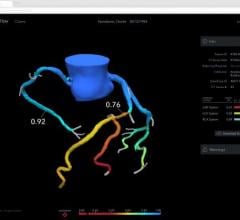
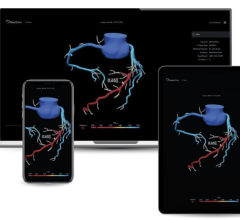
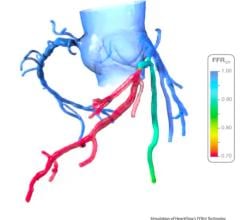
These findings show Heartflow FFRCT — the only AI platform prospectively validated against invasive gold standard — bridges this critical diagnostic gap. By applying advanced AI and computational fluid dynamics to standard CT scans with documented narrowings, Heartflow creates a personalized 3D model that quantifies blood flow within the coronary arteries.5
“CCTA is established as the optimal first-line diagnostic test for coronary artery disease as it is non-invasive, but when anatomical scans show intermediate stenosis, determining whether that blockage is clinically significant remains a critical challenge,” said Alexander Hirsch, M.D., principal investigator of the Fusion trial and associate professor of cardiology at Erasmus MC in Rotterdam, Netherlands. “The Fusiontrial shows that adding Heartflow lesion-specific physiology makes CCTA even more powerful and improves diagnostic efficiency. It gives clinicians the clarity to know which patients require further invasive testing, safely avoiding unnecessary invasive catheterizations while maintaining excellent patient outcomes.”
Reducing Invasive Heart Procedures
Enrolling 528 patients with stable chest pain across twelve hospitals in the Netherlands, Fusion is an independent randomized controlled trial funded through the Dutch government’s Zorginstituut Nederland "Potentially Promising Care" program. The study evaluated Heartflow FFRCT Analysis across diverse scanner vendors in both academic and community hospital settings, with blinded, independent clinical event adjudication.
Key one-year findings include:
- A sustained 44% relative reduction in unnecessary ICA was demonstrated at one year in the Heartflow pathway compared to the CCTA-only group (22% [57/263] Heartflow vs. 39% [103/265] CCTA alone; p < 0.001), consistent with the 90-day primary endpoint results (18% [48/263] vs. 33% [87/265] CCTA alone; p < 0.001).
- Overall rates of ICA were significantly lower at one year in the Heartflow pathway compared to the CCTA-only group (43% [114/263] Heartflow vs. 61% [161/265] CCTA alone; p < 0.001).
- Rates of coronary revascularization remained identical across groups (20% [52/263] vs. 20% [53/265]; p = 0.948), proving that safely reducing diagnostic cath lab procedures did not prevent patients from receiving necessary intervention.
- There were no significant differences in safety endpoints between pathways, including major adverse cardiac events (MACE), ICA complications, or stroke.
Validating Heartflow FFRCT
While previous randomized controlled trials, such as FORECAST and PRECISE, evaluated the pathway of CCTA and Heartflow FFRCT in broader patient populations early in the diagnostic pathway, Fusion is the first randomized trial to test Heartflow FFRCT Analysis at a pivotal clinical junction: immediately following a CCTA scan that identifies anatomically obstructive stenosis, a decision point recently affirmed in the 2026 SCCT/SCAI expert consensus statement and endorsed by the ACC.6,7 As an independent, government-funded study with no industry involvement in trial design or analysis, Fusion delivers robust, unbiased evidence supporting the routine integration of Heartflow FFRCT Analysis into everyday clinical practice. The findings build on more than 15 years of rigorous clinical research across major trials, further establishing Heartflow FFRCT as the leading and most extensively validated CT-FFR technology in cardiology.5,6,7,8
“One of the persistent challenges in cardiology has been accurately identifying, prior to catheterization, which patients have disease severe enough to warrant an invasive procedure,” said Campbell Rogers, M.D., F.A.C.C., Chief Medical Officer at Heartflow. “The Fusion data demonstrate that our technology can meaningfully address this challenge, providing physicians with more precise insight into a patient's disease burden after CCTA has documented stenosis over 50%. This allows care teams to direct invasive procedures to the patients most likely to benefit, while sparing others the risk and burden of a catheterization they may not require.”
References
-
Patel MR, et al. Low Diagnostic Yield of Elective Coronary Angiography. N Engl J Med 2010; 362:886-895. (Demonstrating >50% non-obstructive rate in usual care elective caths).
-
Gulati M, et al. 2021 AHA/ACC/ASE/CHEST/SAEM/SCCT/SCAI Guideline for the Evaluation and Diagnosis of Chest Pain. Circulation 2021; 144:e368–e454.
-
Vrints C, et al. 2024 ESC Guidelines for the Management of Chronic Coronary Syndromes. Eur Heart J 2024; 00:1–105.
-
Tonino PA, et al. Fractional Flow Reserve versus Angiography for Multivessel Evaluation (FAME). N Engl J Med 2009; 360:213-224.
-
Taylor CA, et al. Computational Fluid Dynamics Applied to Coronary Computed Tomography Angiography. J Am Coll Cardiol 2013; 61(22):2233-2241.
-
Curzen N, et al. Fractional Flow Reserve Derived From Computed Tomography in Suspected Stable Angina: The FORECAST Trial. Eur Heart J 2021; 42(37):3807-3818.
-
Douglas PS, et al. A Clinical Pathway to Optimize the Diagnostic Workup of Patients With Suspected CAD: The PRECISE Randomized Trial. JAMA Cardiol 2023; 8(7):643–652.
-
15-Year Evidence Base includes DISCOVER-FLOW (JACC 2011), DeFACTO (JAMA 2012), NXT (JACC 2014), PLATFORM (Eur Heart J 2015), and ADVANCE Registry (Eur Heart J 2019).
-
Narula, et al. EHJ CVI 2024.
-
Danad, et al. JAMA Cardiol 2017.
-
Fairbairn et al. Coronary CT Angiography Plaque as a Predictor of Death, Cardiovascular Death and Myocardial Infarction. Presented at AHA 2025. (Real-world study with n=7,899 patients, higher TPV results in increased cardiovascular death and MI).
-
Madsen KT, et al. ADVANCE-DK 7-year. Presented at TCT Scientific Sessions 2024. (n=900 patients determined a 2.5x increase in cardiovascular events or deaths at 7 years).


 April 30, 2026