AZANO is focused on providing the essential research tools to the scientific community that will accelerate biomedical discovery and ultimately improve human health.
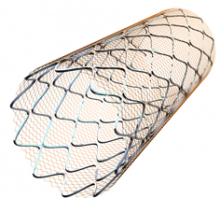
InspireMD Inc. has enrolled the first patient into the CARENET (CARotid Embolic protection study using microNET) multi-center European clinical trial for the new CGuard carotid embolic protection system.
If you enjoy this content, please share it with a colleague
Based on its recent analysis of the superconductor technology for MRI market, Frost & Sullivan recognizes Cutting Edge Superconductors, Inc. with the 2013 North American Frost & Sullivan Award for Technology Innovation Leadership.
St. Jude Medical Inc. has received approval from the U.S. Food and Drug Administration (FDA) for the Allure Quadra Cardiac Resynchronization Therapy Pacemaker (CRT-P), which provides additional pacing innovations for physicians to treat patients with heart failure (HF). The company also announced FDA approvals for the Assurity pacemaker and Endurity pacemaker families of devices.
Biotronik has announced the Food and Drug Administration (FDA) has approved the expansion of Biotronik’s ongoing ProMRI clinical trial. The new phase of the trial (Phase C) will study the company’s ProMRI technology in implantable cardioverter-defibrillator (ICD) devices. Biotronik is the only company in the world with an ICD that is approved for investigational use in a magnetic resonance imaging (MRI) scanner. The ongoing ProMRI study is the first step in making this standalone technology available in the United States.
If you enjoy this content, please share it with a colleague
The NDS Surgical Imaging (NDSsi) Dome S6c diagnostic display is a 6-megapixel (MP) LED widescreen model, and the latest addition to the S-series product family. It features 30-inch widescreen viewing, can be utilized as a single 6 MP or in dual 3 MP bezel-free format and provides both grayscale and color images. A native resolution of 3,280 by 2,048 makes it ideal for viewing a wide range of medical imaging modalities including computed radiography (CR), digital radiography (DR), magnetic resonance (MR), computed tomography (CT), positron emission tomography/computed tomography (PET/CT), ultrasound and 3-D volume rendering. Offering 800cd/m² high-bright LED-backlight technology and 1,000:1 contrast ratio, the Dome S6c delivers a new benchmark in optical clarity and image brilliance in varying ambient light environments.
As long as inexpensive statins, which lower cholesterol, are readily available and patients do not mind taking them, it does not make sense to do a heart comuted tomography (CT) scan to measure how much plaque has built up in a patient’s coronary arteries before prescribing the pills, according to a new study by researchers at UC San Francisco.