Zoll Medical Corp has announced that survival from one of the leading causes of death in the United States, out-of-hospital cardiac arrest, more than doubled from 26 percent to 56 percent when paramedics in Mesa, Ariz., utilized Zoll’s cardiopulmonary resuscitation (CPR) feedback technology in combination with scenario-based training. The findings also showed that high-quality CPR was associated with significantly improved neurologically intact survival.


Cleaning your mouth and cleaning your arteries could be as simple as a once-a-day oral rinse if additional clinical studies confirm preliminary findings about a new product. The Biomedical Development Corp. (BDC) presented data in April to the American Academy of Oral Medicine showing that its oral rinse was safe and effective at fighting gingivitis in a recent clinical trial. But the most surprising finding of the study was that users of the oral rinse showed significantly lower LDL cholesterol levels than the placebo group.


Radiation exposure from multidetector computed tomography (CT) has become a pressing public health concern in both lay and medical publications. Implementation of iterative reconstruction offers the ability to minimize radiation exposure while preserving and, in some cases, improving image quality. However, in order to evaluate iterative reconstruction software, one must first understand the basics of how it works. 


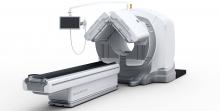
Just when positron emission tomography (PET) appears to be eclipsing single photon emission computed tomography (SPECT) for cardiac imaging, new advances make SPECT more attractive. Both modalities also have suffered setbacks with radiopharmaceutical supply problems in recent years and both modalities have their pros and cons. Looking toward the future, the question of which modality will dominate remains unanswered. PET shows major promise with exciting new tracers, while new SPECT scanner technology introduced at the Society of of Nuclear Medicine and Molecular Imaging (SNMMI) 2013 meeting may herald a rebirth for SPECT with previously unseen image quality enhancements. 


Percutaneous transluminal coronary angioplasty (PTCA) balloon catheters were the first devices used in the field of interventional cardiology. The growth of the stent market, which is the largest segment for interventional cardiology devices, has helped to fuel the sales of PTCA balloons. In addition, this market is driven by U.S. Food and Drug Administration (FDA) policy, pre-/post-stent dilations and plaque debulking.


Computerized and semi-automated inventory control system technology offers a more efficient way for cardiovascular departments, especially catheterization and electrophysiology (EP) labs, to track what is on their shelves, when to re-order supplies, their actual costs per procedure and to identify new ways to cut costs.


Healthcare reform requiring wider access and enterprise sharing of patient images and records are making Web-based cardiology picture archiving and communication systems (PACS) a more attractive solution over traditional thick-client, server-based systems. In just the past few years there has been a departure from thick-client cardiology and radiology PACS to Web-based platforms. There are several reasons for this, including better interoperability, anywhere-anytime access, remote access to data and images, and reduction of IT burdens. Web-based systems also enable easier delivery of many healthcare reform Stage 2 meaningful use (MU) requirements. 


Finding ways to lower patient radiation dose from both medical imaging and interventional cardiology has become a major trend. However, when vendors start talking dose, it is important to realize there are no set industry standards agreed upon by manufacturers to calculate dose. For this reason, I call into question vendors’ statistics of how much their technology can lower dose by up to 20, 50 or even 80 percent.  While new technologies such as iterative reconstruction, more sensitive detectors and ECG gating do indeed lower dose, quantifying it can be a moving target. 


Subscribe Now