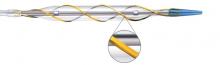
CardioKinetix Inc. announced results of a meta-analysis study of the catheter-based Parachute Ventricular Partitioning Device. Six-month clinical results from 91 U.S. and European patients with ischemic heart failure were presented.


InspireMD Inc. announced new six-month results from the MASTER trial demonstrating that the MGuard embolic protection stent (EPS) outperformed bare metal stents and drug-eluting stents in all-cause mortality in ST-segment elevation myocardial infarction (STEMI) patients.


Welch Allyn has released its new FlexiPort EcoCuff blood pressure cuff and EarlySense Vitals surveillance system. Both products enable improvements in patient safety and clinical decision-making to help reduce risk for facilities.

Although not designed for cardiovascular surgery, a new robotic surgical system being developed will likely add to the growing interest of using magnetic resonance imaging (MRI) as a replacement for X-ray angiographic interventional procedural guidance.

Neovasc Inc. reported positive animal data from its Tiara program for the transcatheter treatment of mitral valve disease. Data presented is on long-term implantation of the Tiara mitral replacement valve in an animal model of mitral regurgitation (MR). 

Syntermed Inc. has been awarded 510(k) clearance for Emory Cardiac Toolbox version 4.0. "One of the many things that makes Emory Toolbox 4.0 different is SmartReport, the first-ever, cloud-based nuclear cardiology reporting tool using decision support,” said Michael Lee, CEO, Syntermed Inc. The decision support system that powers SmartReport is called Syntermed IDS and will allow diagnosticians to perform faster, more accurate nuclear cardiology reports from single photon emission computed tomography (SPECT) and positron emission tomography (PET) heart scans.


Intermountain Healthcare, a Utah-based nonprofit system of 22 hospitals and 185 clinics, is compiling the cumulative radiation patients receive from about 220,000 higher-dose procedures and imaging exams each year, starting with exams performed in the last quarter of 2012. That information is now readily available to both physicians and patients.


Unavoidable damage caused to the heart and lungs by radiotherapy treatment of tumors in the chest region can be limited by the administration of an ACE inhibitor, a drug commonly used in the treatment of cardiovascular disease, a group of Dutch researchers have found. [1]


Subscribe Now