Boston Scientific Corporation reported interim data from the REDUCE-HTN clinical program, which demonstrated a significant and sustained reduction in the blood pressure of patients treated with the Vessix Renal Denervation System. Data on the first 41 subjects enrolled in the REDUCE-HTN clinical program were presented today at the annual EuroPCR Scientific Program in Paris by Joachim Schofer, M.D., of the Hamburg University Cardiovascular Center.


The American College of Cardiology and the American Heart Association released an expanded clinical practice guideline for the management of patients with heart failure, updating definitions and classifications for heart failure and increasing emphasis on patient-centric outcomes such as quality of life, shared decision making, care coordination, transitions and palliative care.


The National Institutes of Health (NIH), the nation’s medical research agency and the leading supporter of biomedical research in the world, said all of its clinical programs will be effected by $1.55 billion in NIH budget cuts due to sequestration. On March 1, 2013, as required by statute, President Obama signed an order initiating sequestration. This requires NIH to cut 5 percent, or $1.55 billion, of its fiscal year (FY) 2013 budget. NIH must apply the cut evenly across all programs, projects and activities (PPAs), which are primarily NIH institutes and centers. 


Many providers, and even consumers, are now aware of low-dose technologies, such as computed tomography (CT) systems that enable high-quality images with low radiation. Today, a growing number of hospitals are also adopting monitoring technology that takes dose management to the next level.


Covidien recently introduced its RapidCross 0.014-inch Rapid Exchange Percutaneous Transluminal Angioplasty (PTA) Balloon, which offers rapid exchange (RX) convenience with kink-resistant pushability for below-the-knee (BTK) interventions.

The Medicare trustees have projected that the trust fund that finances Medicare’s hospital insurance coverage will remain solvent until 2026, two years beyond what was projected in last year’s report.


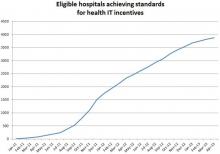
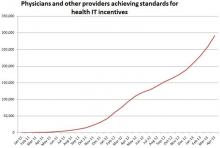
The U.S. Department of Health and Human Services (HHS) announced that more than half of all doctors and other eligible providers have received Medicare or Medicaid incentive payments for adopting or meaningfully using electronic health records (EHRs).


Subscribe Now