

Patients with coronary artery disease who undergo treatment at the University of Maryland Medical Center (UMMC) now can receive long-term therapy based on information found in their genes. As part of a new personalized medicine initiative, the medical center is offering genetic testing to help doctors determine which medication a patient should take after a stenting procedure in order to prevent blood clots that could lead to serious or fatal heart attacks and strokes.
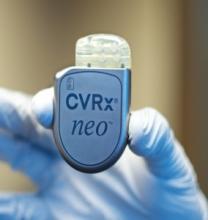

Prof. Dr. Béla Merkely and Dr. Péter Sótonyi at Semmelweis Egyetem Kardiológiai Központ in Hungary completed the first patient implant of the Barostim neo device for hypertension. Barostim neo is a small, easy to implant device manufactured by CVRx.


The Journal of American College of Cardiology has published the results from Corindus Vascular Robotics’ CorPath PRECISE (Percutaneous Robotic-Enhanced Coronary Intervention) study in the April 2013 issue. Results of the trial demonstrate the CorPath System is safe and feasible for patients, with significantly lower harmful radiation exposure to the operator.


The U.S. Food and Drug Administration (FDA) granted 510(k) clearance to Medical Imaging Electronics (MiE) and Nuclear Imaging Services (NIS) ECAT Scintron. It is the only upgrade path available to the Siemens ECAT 47, ECAT HR+, and ECAT Accel positron emission tomography (PET) systems. The ACSII and SUN workstation are removed from the system and replaced with new PC-based technology that provides new and existing users of the ECAT series PET systems access to faster processing speeds, new acquisition protocols and parts availability. With improved reliability and longevity, the ECAT Scintron redefines the life cycle of dedicated PET systems in the U.S. market.


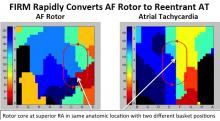
New research presented at Heart Rhythm 2013 continues to show promising results for focal impulse and rotor modulation (FIRM) mapping to effectively target atrial fibrillation (AF) sources and improves ablation therapy outcomes. The novel diagnostic real-time mapping system helps target ablation therapy to patient-specific drivers of AF rather than to anatomical targets, which can improve patient outcomes.


The incremental mortality in implantable pacemaker and defibrillator recipients who experience a device infection, compared to patients without device infection, is substantial and persists for at least three years after index hospitalization with infection. These are the key findings of a retrospective cohort study of 200,219 Medicare fee-for-service patients undergoing cardiac device procedures, with and without infection, that were presented today by M. Rizwan Sohail, M.D., a researcher from the Mayo Clinic divisions of infectious diseases and cardiovascular diseases, at Heart Rhythm 2013, the Heart Rhythm Society’s 34th Annual Scientific Sessions.


Subscribe Now