September 10, 2012 — Maquet Cardiovascular LLC announced 30-day results from the large, randomized, multicenter intra-aortic balloon pump (IABP)-SHOCK II clinical trial in patients with acute myocardial infarction (AMI) who were in cardiogenic shock and undergoing early revascularization. The findings showed that use of intra-aortic balloon counter-pulsation (IABC) therapy was associated with an observed improvement in all-cause mortality at 30 days, but the trial did not meet the pre-specified 12 percent improvement in survival endpoint compared with standard medical therapy.

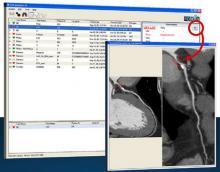
September 10, 2012 — TeraRecon announced the launch of iNtuition Review, iNtuition Enterprise Medical Viewer (iEMV) and iNtuition Share. The software suite enhances the iNtuition portfolio with multimodality review solutions for advanced imaging, such as cardiac and breast procedures, with enterprise distribution and image sharing capability.

September 10, 2012 — In a recent study, researchers found that coffee consumption is inversely related to mortality, with consumption of greater than or equal to six cups of coffee per day associated with a 10 percent decreased mortality rate in men and 15 percent decreased mortality in women.

September 10, 2012 — In a recent clinical trial, the Solitaire Flow Restoration Device dramatically outperformed the standard mechanical treatment. Findings from the trial, called SOLITAIRE With the Intention for Thrombectomy (SWIFT), are published online in The Lancet and will also appear in a later print edition of the journal.


September 10, 2012 — Atrial fibrillation (AF) is a common complication of cardiac surgery, occurring in 10 to 40 percent of patients. Recent studies show it to be associated with poorer health following surgery and poorer long-term survival. Furthermore, development of AF after cardiac surgery leads to average additional healthcare costs of $15,000 to $20,000.


September 7, 2012 — The American Medical Association (AMA) recently sent letters to Sen. Ben Cardin of Maryland and Rep. Pete Olson of Texas supporting passage of the Diagnostic Imaging Services Access Protection Act (H.R. 3269/S. 2347).


There has been much debate whether computer-aided detection software for computed tomography (CT) scanners to detect coronary blockages is really a worthwhile expense. There has long been apprehension by experienced cardiologists and radiologists who can easily read coronary CT angiography (CCTA) scans for plaque burden. However, the technology may have a niche application for immediate STAT reads of chest pain patients during off-hours, especially at rural medical centers.


Subscribe Now