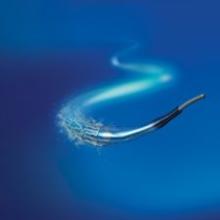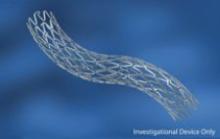

ev3 Inc. has announced a worldwide fracture-free guarantee in support of its new EverFlex family of stents. In the event that an EverFlex stent should fracture within two years of implantation, ev3 will provide a free replacement product to the medical facility, subject to the terms and conditions of the program.

The guarantee was announced today at the Cardiovascular Research Foundation's annual Transcatheter Cardiovascular Therapeutics (TCT) scientific symposium in Washington, D.C.

Boston Scientific Corporation announced that an independent meta-analysis of more than 3,500 patients from five clinical trials, conducted by the Cardiovascular Research Foundation, confirmed the Company's own analysis that the TAXUS paclitaxel-eluting coronary stent is safe and effective. The new analysis was presented by Gregg W.

Radiofrequency ablation is more effective than treatment with amiodarone for the prevention of atrial flutter recurrence in patients who experienced a first symptomatic episode, according to the results of a new study. In addition to the superiority of ablation over amiodarone, there was no increased risk of atrial fibrillation, even in this cohort of older patients, report investigators.

Obesity and the illnesses associated with it cost the U.S. some 90.7 billion dollars a year in health care costs, a University of Pennsylvania researcher said.
Among developed countries, the U.S. has the most obese and overweight people, representing 66 percent of its overall population.

CoreValve announced that its patented ReValving System, consisting of a 18F delivery catheter, was used to percutaneously implant its proprietary porcine pericardial-tissue bioprosthesis over the severely calcified aortic heart valve of an 89-year-old woman.

A new program designed to provide hospitals with practical tools to help them reduce door-to-balloon times in STEMI patients is in the works, and experts who have collaborated on the project say they hope to launch it next month. Spearheaded in part by investigators who have worked on previous Guidelines Applied in Practice (GAP) studies or on door-to-balloon-time research and in part by the American College of Cardiology (ACC), the D2B: An Alliance for Quality initiative is still being finalized but has already prompted calls from hospitals and physicians hoping to sign up.

When it comes to opening blocked carotid arteries, surgery may be less risky than stents according to a study by French doctors including Jean-Louis Mas, M.D., of the Hospitaux Sainte-Anne in Paris.

The new Fetch Aspiration Catheter from Possis Medical, Inc. has received 510(k) clearance from the FDA. Employing catheter technology from the company’s AngioJet Rheolytic Thrombectomy System, the Fetch catheter gives physicians another alternative for the aspiration of small, fresh blood clots (thrombus) and other embolic debris from arteries.

Boston Scientific has European CE clearance to begin marketing a private-label XIENCE V everolimus-eluting coronary stent made by Abbott Vascular. The stent, named PROMUS, makes BSC the only company offering two distinct DES platforms in the CE geographies.

The company can market PROMUS in the 25 countries of the European Union; the CE mark also supports market registrations in other regulated countries in Asia, Latin America and Eastern Europe.

A test designed to measure the durability of CoreValve’s ReValving device reached 200 million cycles, the company has reported. CoreValve’s chairman, CEO and founder, Dr. Jacques Seguin, says initial findings indicate its proprietary porcine pericardium aortic heart valve behaves, in vitro, better than tissue valves.

Subscribe Now