There is growing concern among patients and regulators that medical devices, especially implantable electrophysiology (EP) devices with wireless capabilities, are vulnerable to cyber attack. While there are no known instances of a hacker accessing and manipulating a patient’s implanted device, this fear was raised publicly in August 2016 when the financial investment firm Muddy Waters reported specific vulnerabilities with St.


August 16, 2017 — BioCardia Inc. recently announced completion of treatment for the 10-patient roll-in cohort for the pivotal Phase III CardiAMP Heart Failure Trial. A pre-specified review of the 30-day outcomes in this cohort by the Data Safety Monitoring Board is anticipated in the third quarter of 2017.

August 16, 2017 — A study has examined the efficacies of various post-percutaneous coronary intervention (PCI) bivalirudin doses on net adverse clinical events (NACEs) and mortality. Patients recovering from PCI with bivalirudin are at a lower risk of bleeding, but also suffer an increased risk of acute stent thrombosis (ST). Bivalirudin is a direct thrombin inhibitor that can prevent blood clots during and after an angioplasty procedure.


August 16, 2017 — The Centers for Medicare and Medicaid Services (CMS) announced a proposed rule to reduce the number of mandatory geographic areas participating in the Center for Medicare and Medicaid Innovation’s (Innovation Center) Comprehensive Care for Joint Replacement (CJR) model from 67 to 34. In addition, CMS proposes to allow CJR participants in the 33 remaining areas to participate on a voluntary basis. In this rule, CMS also proposes to make participation in the CJR model voluntary for all low-volume and rural hospitals in all of the CJR geographic areas.


September 12, 2017 – The European Society of Cardiology (ESC) Congress 2017 includes several Hot Line Late-breaking Clinical Trial presentations highlighting the latest cardiovascular science. ESC 2017 includes 21 late-reaking clinical trials, presented and discussed in four Hot Line sessions, plus late breaking results from 12 registries and 12 clinical trial updates. Some of the key presentations with links to the article were:

The International Society for Magnetic Resonance in Medicine (ISMRM) has provided new guidance in the use of contrast agents during MRI scans. Emerging research suggests gadolinium-based contrast agents, injected in a patient's veins to brighten tissues in MRI images, accumulate in the brain. More than 300 million doses of such drugs have been administered since their introduction in 1987.

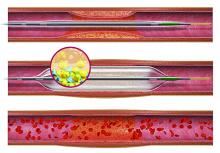
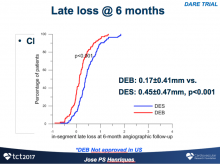
Surmodics Inc. announced receipt of an investigational device exemption (IDE) from the U.S. Food and Drug Administration (FDA) in July to initiate a pivotal clinical trial of the SurVeil drug-coated balloon (DCB). The randomized trial will evaluate the SurVeil DCB for treatment for peripheral artery disease (PAD) in the upper leg compared to the Medtronic IN.PACT Admiral DCB.

Aug. 15, 2017 – Patients undergoing percutaneous coronary intervention (PCI) at safety-net hospitals experienced similar outcomes as patients treated at non-safety-net hospitals, according to research published Aug. 7 issue of JACC: Cardiovascular Interventions. Read the abstract.

Aug. 15, 2017 — The U.S. Food and Drug Administration (FDA) has approved the Vascular Dynamics Inc. (VDI) investigational device exemption (IDE) study so it can initiate its pivotal trial for its MobiusHD System for the treatment of resistant hypertension.

Aug. 10, 2017 — The American College of Radiology (ACR) developed three new guidance documents and revised 32 others to advance the science of radiology and improve the quality of service to patients.

Subscribe Now