
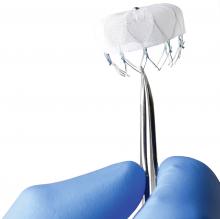
November 7, 2016 – Results from the U.S. real-world, post-FDA approval experience of the Watchman device found high procedural success and low complication rates despite implantations by a large percentage of new operators. The Watchman device was approved by the U.S. Food and Drug Administration (FDA) in March 2015 for left atrial appendage occlusion (LAAC) to reduce the risk of stroke in patients with non-valvular atrial fibrillation (AF). 
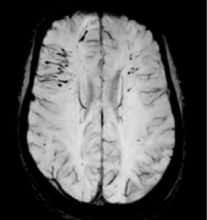

Keystone Heart Ltd. announced that data presented at the Transcatheter Cardiovascular Therapeutics (TCT) 2016 scientific symposium demonstrate an increase in brain lesions for patients following transcatheter aortic valve replacement (TAVR) procedures, which were significantly associated with delirium.

November 7, 2016 – Results from TRANSFORM-OCT, a prospective, randomized trial using optical coherence tomography (OCT) to evaluate strut coverage and neoatherosclerosis (NA), found that bioresorbable polymer-based drug-eluting stents (BP-EES) are comparable to durable polymer-based drug-eluting stents (DP-ZES). The trial examined the Boston Scientific Synergy stent and the Medtronic Resolute Integrity.

Findings were reported at the 28th annual Transcatheter Cardiovascular Therapeutics (TCT) scientific symposium.

November 7, 2016 – A multicenter randomized trial evaluating the role of embolic protection using the Sentinel device during transcatheter aortic valve replacement (TAVR) found that the device was safe but did not meet the primary efficacy endpoint of reduction in median new lesion volume in protected territories assessed by MRI at two to seven days. In addition, neurocognitive function was not significantly improved.

November 7, 2016 – The two-year results from LEADERS FREE, the first randomized clinical trial dedicated to high bleeding risk patients treated with one month of dual antiplatelet therapy (DAPT), found that a polymer-free drug-coated stent (DCS) remained both significantly safer and more effective than the comparator bare-metal stent (BMS) used in the trial. 

The 28th annual Transcatheter Cardiovascular Therapeutics (TCT) scientific symposium, Oct. 29-Nov. 3 in Washington, D.C., featured a number of first report investigations on novel stents that could become the next generation of bioresorbable stents in patients.

November 7, 2016 – The large multinational randomized BIONICS study found that a novel elastic polymer coated ridaforolimus-eluting stent (Medinol’s BioNIR stent) was non-inferior to a zotarolimus-eluting stent (Medtronic’s Resolute) for one-year clinical outcomes in a broad, less selected ‘more comers’ population. Results of this trial will be submitted to the FDA for U.S. approval of this novel drug-eluting stent. 

Findings were reported at the 28th annual Transcatheter Cardiovascular Therapeutics (TCT) scientific symposium. 

November 7, 2016 – Two-year results from the COLOR Trial, the first large-scale multicenter prospective study of its kind, found that percutaneous coronary intervention (PCI) of lipid-rich plaque (LRP) detected by near infrared spectroscopy (NIRS) was not associated with subsequent major adverse cardiac events (MACE) compared to PCI of non-LRPs.


November 4, 2016 — Here is the list of the top 20 most popular pieces of content on the Diagnostic and Interventional Cardiology (DAIC) magazine website from the month of October based on website analytics:  

1. 5 New Implantable Cardiovascular Technologies to Watch


Subscribe Now
