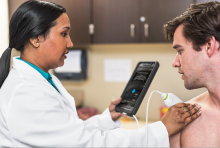
Bradycardia – a slower than normal heartbeat – does not increase the risk of developing cardiovascular disease, according to a study conducted by researchers at Wake Forest Baptist Medical Center. The study is published in the Jan.19 online edition of the Journal of American Medical Association Internal Medicine.

Global Genomics Group (G3) and GNS Healthcare (GNS), announced preliminary results of the GLOBAL Clinical Study designed to identify biomarkers associated with coronary artery disease (CAD). The study provided proof of concept of the approach by prospectively identifying a biochemical pathway known to be associated with CAD.

Vivasure Medical announced Conformité Européenne (CE) Mark approval of the world’s first fully bioabsorbable percutaneous vascular closure device for large-bore femoral arteriotomies.

Medtronic plc announced that the IN.PACT Admiral drug eluting balloon (DEB) has received CE (Conformité Européene) Mark for arteriovenous (AV) access to help maintain hemodialysis access in patients with end-stage renal disease.


2016 is starting off a whole lot better than last year for 14-year-old Oswaldo Jimenez of Salem, Ore. Last year at this time, he was sick. Life-threateningly sick. Diagnosed with pulmonary arterial hypertension at age 9, his heart and lungs were failing, and a heart-lung transplant seemed to be his only real hope for survival.


Biointegrated sensors for long-term, continuous tracking of body chemistry may make health and disease monitoring as easy as turning on your smartphone. Unveiled by Profusa Inc., of South San Francisco, Calif., tiny bioengineered biosensors will soon enable real-time detection of our body's unique chemistry, providing action­able, medical-grade data for personal and medical use for as long as two years at a time. The company's technology and vision were presented at the CES Digital Health Summit, Jan. 6-9 in Las Vegas.

Teleflex Inc. has acquired privately held Nostix LLC, developer of innovative tip confirmation systems that are used to increase the accuracy of vascular access device placement.

Patients between the ages of 40 and 70 who undergo aortic valve replacement (AVR) may fare better with tissue-based valves than metal-based valves, according to a review article posted online by The Annals of Thoracic Surgery.

Subscribe Now