Merge Healthcare announced it recently acquired DR Systems Inc. for about $70 million. DR Systems is a privately held San Diego-based company in medical imaging information systems.

Nanometer-sized “drones” could become a new way to prevent heart attacks caused by atherosclerosis, according to a study in pre-clinical models by scientists at Brigham and Women’s Hospital (BWH) and Columbia University Medical Center. The drones could be used to deliver a special type of healing molecule to fat deposits in arteries, according to findings published in the February 18th online issue of Science Translational Medicine.

Patients who experienced a certain type of heart attack who received the anticoagulant fondaparinux had a lower risk of major bleeding events and death compared to patients who received low-molecular-weight heparin (LMWH), according to a study in the February 17 issue of the Journal of the American Medical Association (JAMA). This was found to be true both in the hospital and after six months; however, both groups had similar rates of subsequent heart attack or stroke.

By loading magnetic nanoparticles with drugs and dressing them in biochemical camouflage, Houston Methodist researchers say they can destroy blood clots 100 to 1,000 times faster than a commonly used clot-busting technique. The finding, reported in Advanced Functional Materials, is based on experiments in human blood and mouse clotting models.


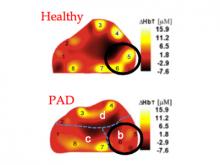
Approximately 8 to 12 million people in the United States alone are suffering from peripheral arterial disease (PAD), a common vascular problem that is also one of the most serious complications of diabetes. Andreas Hielscher, professor of biomedical engineering, electrical engineering and radiology (physics) at Columbia Engineering, is developing a novel technology that could improve diagnosis of this crippling disease and make it easier to monitor patients.


The ScottCare Corp. announced its new novi patch Holter monitor will be available in the United States for the first time at the 2015 Scientific Sessions of the American College of Cardiology in San Diego, Calif., March 14-16.

CBSET, a not-for-profit preclinical research institute, announced that its scientists have defined the optimal tissue debulking protocol for treating in-stent restenosis (ISR) with Boston Scientific’s Jetstream Navitus atherectomy device. These findings were disclosed at the Cardiovascular Research Technologies 2015 annual scientific meeting (CRT 2015) in Washington, D.C.

Sunshine Heart Inc. announced it has received unconditional approval from the U.S. Food and Drug Administration (FDA) to conduct an interim analysis of COUNTER HF, the company's U.S. pivotal study.

Subscribe Now
