
Technology
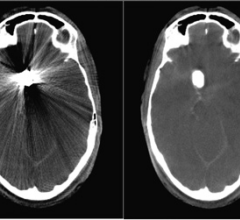
Siemens Healthcare presented two new clinical applications for angiography at the 2014 Radiological Society of North America (RSNA) annual meeting. The syngo Dyna4D software enables time-resolved 3-D imaging in angiography, permitting 3-D visualization of blood vessel volume as well as blood flow. The syngo DynaCT SMART algorithm allows the clinician to remove metal artifacts from patient medical images, potentially enabling the detection of complications such as hemorrhaging that occur in the vicinity of metallic objects contained within the patient’s body.
 December 12, 2014
Technology
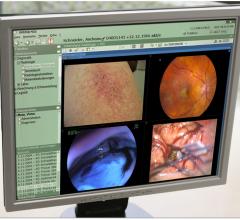
Agfa HealthCare announced it has converged its ICIS and IMPAX Agility brands into a single platform called Agfa HealthCare Enterprise Imaging. The new platform allows any physician, across the department, hospital or regional network to create, collaborate on, exchange, view and manage a comprehensive medical imaging record throughout the patient's care, with the ability to integrate with an electronic health record (EHR).
December 12, 2014
Technology
Philips introduced the DoseWise Portal, a comprehensive radiation dose management software solution aimed at managing radiation exposure risk to patients and their caregivers at RSNA 2014.
December 12, 2014Sponsored Content

Feature | Nuclear Imaging
Cardiac PET/CT represents a major advancement in cardiovascular diagnostics, offering significant clinical and ...
November 12, 2025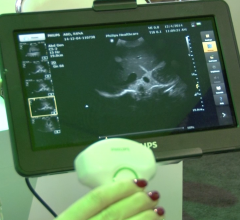
News
Philips announced the initiation of a Consortium of health care leaders that will drive the creation of mobile ultrasound solutions, highlighted by the demonstration of a new app-based ultrasound proof-of-concept.
December 12, 2014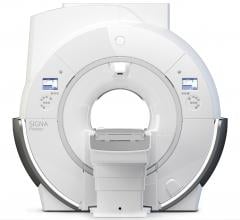
Technology
GE Healthcare introduced two 510(k) pending 1.5T MRI systems, Signa Creator and Signa Explorer at RSNA 2014.
December 12, 2014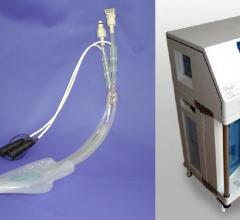
News
Researchers at Okayama University in collaboration with several medical centers in Japan have demonstrated the safety and efficacy of a hypothermal treatment – pharyngeal cooling – for cardiac arrest patients.
December 11, 2014Sponsored Content
Feature
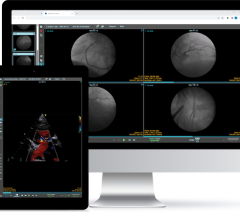
SPONSORED CONTENT — Studycast is a comprehensive imaging workflow system that allows healthcare professionals to work ...
June 17, 2025
News
Medtronic, Inc. announced it has initiated the PERIGON (PERIcardial SurGical AOrtic Valve ReplacemeNt) Pivotal Trial, a global, prospective clinical trial evaluating an investigational surgical aortic heart valve made from bovine pericardial (cow heart) tissue.
December 11, 2014
News
Forty-five percent of providers interviewed by KLAS are planning to consolidate their CVIS products, but less than half plan to stick with their current vendor/solution.
December 11, 2014
News
A new study evaluating Optim-insulated implantable cardioverter defibrillator (ICD) leads found low rates of all-cause mechanical failure during a median follow-up of 3.2 years.
December 11, 2014Sponsored Content

Feature | Information Technology
Providing exceptional cardiovascular care for patients to achieve the best possible outcomes is the number one goal for ...
March 21, 2024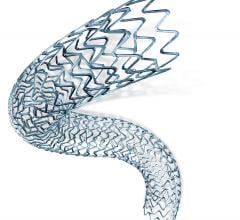
News
In the first successful United States trial of a bioabsorbable polymer stent, the Boston Scientific Synergy everolimus-eluting bioabsorbable polymer platinum chromium coronary stent system met its primary endpoint in this non-inferiority study, which evaluated the one-year rate of target lesion failure (TLF).
December 10, 2014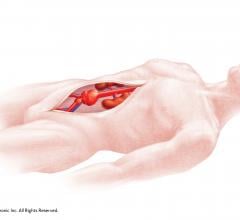
Technology
Medtronic Inc. announced the launch in Europe and the United States of the Endurant IIs AAA stent graft, which received CE mark and U.S. Food and Drug Administration approval to be used in the minimally invasive treatment of abdominal aortic aneurysms (AAA).
December 10, 2014
Technology
Stethoscope provides high acoustic sensitivity for performing general physical assessments
December 10, 2014Sponsored Content

Feature | Cardiac Imaging
Cardiac positron emission tomography (PET) is growing in popularity among cardiologists because it provides the ability ...
March 05, 2024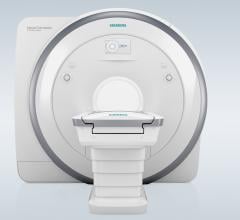
Technology
Siemens Healthcare plans to expand its portfolio of magnetic resonance imaging (MRI) systems to include the Magnetom Amira 1.5 Tesla system, which the company introduced at RSNA 2014.
December 10, 2014News
CardioKinetix Inc. announced it has completed a $50 million financing led by Edwards Lifesciences Corp. with participation from other existing investors. This financing provides CardioKinetix with the capital necessary to complete the PARACHUTE IV randomized pivotal clinical trial of the Parachute ventricular partitioning device for the treatment of heart failure.
December 09, 2014
Feature
A study published in the Journal of the American College of Cardiology (JACC) shows intravascular near-infrared spectroscopy (NIRS) can identify lipid core-containing plaques, implicated in most heart attacks. The study shows the technology might be used as a means to predict the risk of future major adverse cardiac and cerebrovascular events (MACCE).
December 09, 2014