September 9, 2015 — Researchers at Thomas Jefferson University showed that a simple questionnaire, evaluation and pulse-oximetry monitoring can lead to early detection of sleep apnea in patients hospitalized for congestive heart failure (CHF). The results were published in the Journal of American College of Cardiology: Heart Failure.
“Since traditional screenings are not always effective in patients with congestive heart failure, additional tools are needed,” said lead author Sunil Sharma, M.D., FAASM, associate professor of pulmonary medicine in the Sidney Kimmel Medical College at Thomas Jefferson University. “Our team was able to validate a screening strategy that can be instituted during hospitalization and effectively detect sleep disordered breathing among patients with congestive heart failure.”
This study adds to a growing body of research suggesting a connection between sleep disordered breathing and heart failure. “While an estimated 70 percent of patients with congestive heart failure have underlying sleep disordered breathing, only a minority, roughly 2 percent, are diagnosed and treated. Yet early recognition and treatment of this disorder in patients with congestive heart failure has been shown to improve ejection fraction, acute heart failure and may even reduce readmissions and mortality,” Sharma continued.
Consecutive patients admitted for congestive heart failure at Thomas Jefferson University Hospital were screened by respiratory therapists using the STOP-BANG Questionnaire (Snoring, Tiredness during daytime, Observed apnea, high blood Pressure – Body mass index greater than 35, Age greater than 50 years, Neck circumference greater than 40 centimeters and Male gender).
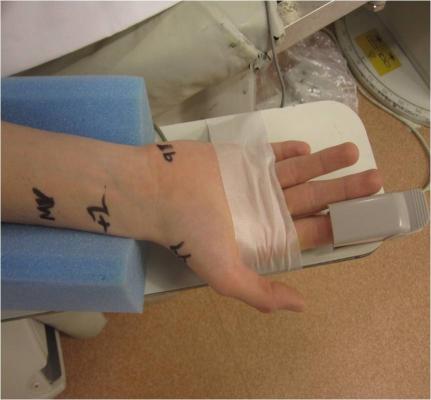
If the patient screened positive, they received a formal sleep consult during their hospital stay and underwent high-resolution pulse-oximetry testing, which assessed the patient’s oxygen desaturation index (ODI). This low-cost device measures how much oxygen is in a patient’s blood. Researchers hypothesized that dips in oxygen levels throughout the night were a sign of obstructive sleep apnea.
Patients with a high ODI were recommended to undergo overnight polysomnography as an outpatient. Of those who followed up with the recommended polysomnography (n=68), 94 percent (n=64) were diagnosed with sleep disordered breathing.
“Patients with congestive heart failure do not always present with traditional symptoms of sleep apnea, like daytime sleepiness and heavy snoring,” said Paul J. Mather, M.D., FACC, FACP, Lubert Family Professor of Cardiology in the Sidney Kimmel Medical College at Thomas Jefferson University and director of the Advanced Heart Failure and Cardiac Transplant Center at the Jefferson Heart Institute. “This study presents cardiologists with a cost-effective clinical pathway to detect sleep disordered breathing while these patients are hospitalized.”
“Our team’s research showed that overnight pulse-oximetry, a simple low cost device used in the hospital setting, correlates well with the gold-standard polysomnography,” said David J. Whellan, M.D., MHS, FACC, FAHA, the James C. Wilson Professor of Medicine in the Sidney Kimmel Medical College at Thomas Jefferson University and senior author on the study. “Future research is need to see if early screening and intervention of sleep disorder breathing, specifically obstructive sleep apnea, can reduce readmissions, morbidity and mortality in patients with congestive heart failure.”
For more information: www.jefferson.edu
 September 11, 2026