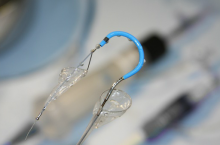
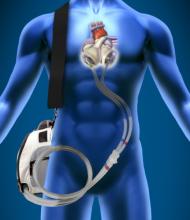
The Cardiovascular Cell Therapy Research Network (CCTRN), has selected Cytori Therapeutics, Inc. to supply adipose-derived regenerative cells (ADRCs) for a clinical trial aimed at evaluating the safety and feasibility of treating patients with Left Ventricular Assist Devices (LVADs). 


For the first time in the United States, doctors at Henry Ford Hospital used a minimally invasive procedure to replace a failing, hard-to-reach heart valve with a new one – and placed it just outside the heart. 


Angiographic imaging system vendors have developed several new technologies to address emerging cath lab trends, including the need to reduce radiation dose, improve image quality and enable advanced procedural image guidance. All three of these points have become increasingly important as more complex procedures are attempted in interventional cardiology cath labs and hybrid ORs. These procedures include transcatheter aortic valve replacement (TAVR), mitral clip valve repairs, left atrial appendage (LAA) occlusions, atrial and ventricular septal defect closures, and new interventions for both electrophysiology (EP) and heart failure.


A key prediction for interventional cardiology coming out of recent Transcatheter Cardiovascular Therapeutics (TCT) and American College of Cardiology (ACC) meetings is that bioresorbable stents will eventually replace conventional metallic stents in the coming years. Experts say dissolving stents have their drawbacks compared to metallic stents, but as the technology continues to advance, these issues may be resolved. Even if they are not, experts say growing clinical data shows the benefits of bioresorbable stents may outweigh any drawbacks.
 

As technology continues to advance for all diagnostic imaging modalities, it sometimes reminds me of a race between vendors to build a better mouse trap. The main issue between cardiac echo, computed tomography (CT), magnetic resonance imaging (MRI), nuclear (SPECT and PET) and invasive angiography is that each has its strengths and weaknesses. 

As technology continues to advance for all diagnostic imaging modalities, it sometimes reminds me of a race between vendors to build a better mouse trap. The main issue between cardiac echo, computed tomography (CT), magnetic resonance imaging (MRI), nuclear (SPECT and PET) and invasive angiography is that each has its strengths and weaknesses. When one test falls short, another is used to add diagnostic information, but it also adds time and cost.

In patients who experienced an acute coronary syndrome (ACS) event, use of the drug darapladib to inhibit the enzyme lipoprotein-associated phospholipase A2 did not reduce the risk of recurrent major coronary events.

CorMatrix Cardiovascular announced that it has received U.S. Food and Drug Administration (FDA) clearance to market the CorMatrix CanGaroo ECM Envelope for use with cardiac implantable electronic devices (CIED’s) including pacemakers and implantable cardioverter defibrillators (ICD’s). 

September 3, 2014 — Jobst Vascular Institute is conducting pioneering research that looks at using stents to treat blocked veins. The Cook Medical VIVO clinical research study aims to determine the safety and effectiveness of the Zilver vena venous self-expanding stent in the treatment of vein obstructions.

Subscribe Now