Emergency department patients with low-risk chest pain show improved knowledge of their health status and follow-up options after talking through treatment options with a physician, according to Mayo Clinic research.


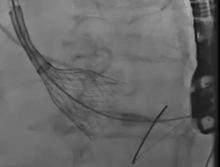
April 7, 2016 — New data demonstrates that for aortic stenosis patients at intermediate-risk for open-heart surgery, transcatheter aortic valve replacement (TAVR) with the latest generation of balloon-expandable device is superior to surgery, resulting in better patient outcomes.


April 6, 2016 — Tests used to diagnose and assess the severity of coronary artery disease appear to function differently for women and men who have stable symptoms, according to researchers from Duke Clinical Research Institute.

The finding, presented April 4 at the American College of Cardiology (ACC) Scientific Sessions meeting in Chicago, adds new insights into the differences between men and women who are newly diagnosed with heart disease.

End-stage heart failure patients treated with stem cells harvested from their own bone marrow experienced 37 percent fewer cardiac events — including deaths and heart failure hospital admissions — than a placebo-controlled group, according to a new study.

North Fulton Hospital, Roswell, Ga., is one of the first healthcare providers in the United States to purchase the new Carestream Touch Prime XE Ultrasound System.

New research shows individuals with a greater degree of activity in the stress center of the brain also have more evidence of inflammation in their arteries and were at higher risk for cardiovascular events, including heart attack, stroke and death.

April 5, 2016 — Philips announced that a combined total of more than 5,000 patients have been enrolled in three prospective clinical studies to assess Philips Volcano’s proprietary iFR (instant wave-Free Ratio) measurement technology.

Chest pain and shortness of breath are the most common symptoms reported by both women and men with suspected heart disease, a finding in contrast to prior data.

Novel technology developed by HeartFlow Inc. significantly reduces the need for invasive procedures to diagnose patients suspected of having coronary artery disease.

There has been a lot of conjecture that transcatheter aortic valve replacement (TAVR) may one day replace open-heart surgical aortic valve replacement (SAVR). However, after attending the American College of Cardiology (ACC) 2016 meeting, it is evident that change will come much sooner than anyone anticipated. “Wow” is really the key summary I can offer regarding the TAVR vs. SAVR data presented at ACC. Three key presentations were all positive for TAVR, showing it is at least equal or superior to surgery.

Subscribe Now