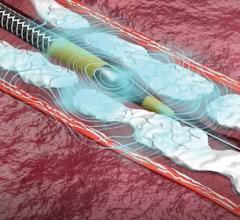
June 5, 2017 – The U.S. Food and Drug Administration (FDA) granted market clearance for the Claret Medical Sentinel Cerebral Protection System (CPS), via de novo classification, enabling U.S. commercialization of the device. The Sentinel is the first and only device available in the U.S. that offers protection against the risk of stroke by capturing and removing debris dislodged during transcatheter aortic valve replacement (TAVR) before it reaches the brain. In the pivotal SENTINEL randomized controlled trial, use of Sentinel reduced strokes by 63 percent in the first 72 hours after TAVR and maintained a substantial difference at 90 days.[1]
Claret Medical will launch the device in selected high volume TAVR centers of excellence across the U.S., beginning immediately. The company is also collaborating with the Centers for Medicare and Medicaid Services (CMS) to develop a pathway to achieve a new technology add-on payment and has already established an ICD code for reimbursement of the Sentinel.
VIDEO: Declining TAVR Stroke Rates in Key Trials Presented at ACC.16. Chandan Devireddy, M.D., assistant professor of medicine at Emory Healthcare in Atlanta and an investigator in the PARTNER trials, discusses the positive late-breaking PARTNER II and IIA data presented at ACC.16.
TAVR is an effective and popular method to replace a diseased aortic heart valve in a minimally invasive way, but recent studies have found that almost one in 10 patients experience a clinically-apparent stroke due to the procedure.[2] The majority of strokes occur during the procedure or within 72 hours,[2] likely caused by debris that breaks loose from the native heart valve or aortic wall and travels towards the brain, leading to potential neurological damage.
“Strokes are devastating — they are random and unpredictable, and they are one of the biggest fears of any TAVR patient and their treating physician. Anything we can do as clinicians to reduce the risk of brain injury is extremely meaningful,” stated Martin Leon, M.D., of Columbia University Medical Center/New York-Presbyterian Hospital, and chairman of the SENTINEL Trial Clinical Steering Committee. “The 63 percent reduction in clinical strokes in the first 72 hours after TAVR, combined with the fact that one in four patients had an average of 25 particles of debris collected that were visible to the naked eye, is striking. The device was delivered safely, added minimal time to the procedure, and performed as intended with capture of embolic material and reduction in ischemic brain injury.”
Leon continued, “As TAVR physicians, in this new era of transcatheter cerebral embolic protection, we now have an obligation to communicate this information during a shared decision-making process to patients and their families as they are informed about TAVR treatment options.”
In clinical studies, the Sentinel removed visible debris headed towards the brain in 99 percent of TAVR cases, regardless of the type of replacement valve used, and with no added risk.2 The Sentinel is simple to use, with 99 percent deployment success in a median deployment time of four minutes.2 It is securely positioned away from the aortic arch, avoiding damage to that anatomy, minimizing interference with TAVR catheters, and enabling physicians to focus solely on the TAVR procedure.
“The advent of ‘protected TAVR’ is here, and we believe that Sentinel will create a paradigm shift in how TAVR patients are treated in the U.S.,” said Claret Medical President and Chief Executive Officer Azin Parhizgar, PhD. “The science behind the device has set a high bar for other embolic protection devices to meet and its safety record is indisputable. By helping to reduce the occurrence of peri-procedural strokes, we intend to provide patients and physicians with greater peace of mind as they approach a TAVR procedure.”
The Sentinel is the most-studied device in the field of TAVR cerebral protection, having been systematically evaluated in more than 1,000 patients in multiple studies, including three randomized controlled trials. More than 3,500 patients worldwide have been protected with the device to-date, and it is the only cerebral protection system commercially available in Europe, selected Asian countries, and now, the U.S.
Related Content on TAVR Ebolic Protection to Reduce Strokes
VIDEO: Defining the Need for TAVR Embolic Protection
Delirium Significantly Associated With Brain Lesions in Patients Post-TAVR
TCT 2016 late-breaker trial TAVR Embolic Protection Did Not Reduce Emboli Brain Lesions
Study Shows Definitive Neuro Benefit to Using TAVR Embolic Protection
Read the article “Study Shows Definitive Neuro Benefit to Using TAVR Embolic Protection.”
For more information: www.claretmedical.com
References:
1. Data from SENTINEL Trial, included in device’s Instructions for Use (IFU). To view the IFU, click here.
2. Kapadia S, Kodali S, Makkar R, et al. Protection against cerebral embolism during transcatheter aortic valve replacement. JACC. 2017 Jan 31; 69(4): 367-377

 August 28, 2026