January 5, 2017 — A new report published by Allied Market Research forecasts that the global thrombectomy devices market was valued at $982 million in 2016, and is expected to reach $1.389 million by 2022. This total will be supported by a compound annual growth rate (CAGR) of 5.9 percent during the forecast period 2014 to 2022. Mechanical thrombectomy would continue to be the preferred technology throughout the analysis period.

The American Society of Echocardiography (ASE) is in the midst of Echovation Challenge 2017, a competition for its members, and the medical and scientific community at large, to develop innovative solutions in cardiovascular ultrasound technology.

January 5, 2017 –  Reacting to a critical shortage of electrophysiology (EP) lab technicians and nurses who treat heart arrhythmias, SpringBoard Healthcare in collaboration with Duke Heart Center has launched an online education program to prepare EP workers for credentialing exams. 

“With only two accredited schools in the U.S. that graduate less than 20 students each year there simply aren’t enough EP professionals entering the workforce,” Gavin Hays, CEO of SpringBoard Healthcare explained.

At RSNA 2016, Siemens Healthineers unveiled its groundbreaking Compressed Sensing technology, which overcomes a major limitation of magnetic resonance imaging (MRI): long acquisition times. With Compressed Sensing, MRI scans can be shortened dramatically. For example, cardiac cine imaging with Compressed Sensing can be performed in 16 seconds rather than the traditional four minutes, thanks to an innovative algorithm that reduces the amount of data required.2


Only Key Data Points Required

January 5, 2017 — Working in concert, the American Society of Nuclear Cardiology (ASNC), the Intersocietal Accreditation Commission (IAC)’s Nuclear/PET accreditation division and the Society of Nuclear Medicine in Molecular Imaging (SNMMI) are mandating optimized radiation doses in conjunction with the nuclear cardiology studies (i.e., myocardial perfusion imaging) performed throughout the United States and beyond.

January 5, 2017 — Abbott announced it completed the acquisition of St. Jude Medical Inc. The transaction provides Abbott with expanded opportunities for future growth and is an important part of the company's ongoing effort to develop a stronger, diverse portfolio of medical device technology.

In a study published online by JAMA Cardiology, researchers from Stanford University assessed the feasibility of measuring physical activity, fitness and sleep from smartphones. The goal was to gain insight into activity patterns associated with life satisfaction and self-reported disease.

A high-sensitivity blood test could be used to predict which patients are at risk of a heart attack according to new research funded by the British Heart Foundation (BHF).

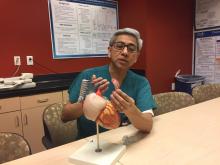
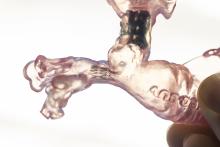
A new minimally invasive technique for repairing the most common cardiac birth defect in extremely premature newborns can be performed safely with a high success rate in babies as small as 755 grams – about 1.6 pounds – only a few days after birth.

January 4, 2017 — A smartphone application made it possible to use the iPhone camera to detect atrial fibrillation via facial signals and without physical contact, according to a preliminary study presented at the American Heart Association (AHA) Scientific Sessions 2016 in November.

The technology, called Cardiio Rhythm, detects subtle beat-to-beat variations in facial skin color, which reflect a person's heart rate fluctuation. They tested the app on 85 hospitalized patients, comparing the app to recordings on a 12-lead electrocardiogram (ECG).

Subscribe Now