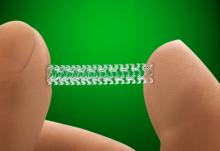
Biotronik announced results establishing non-inferiority of the Orsiro hybrid drug-eluting stent (DES) to the Resolute Integrity DES were presented during a Hotline Session at EuroPCR 2016.

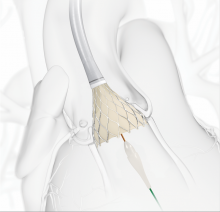
June 3, 2016 — Cardionovum GmbH recently announced the completion of enrollment of the RAPID trial. Results will be used to further support the safety and effectiveness of the company’s Legflow drug-coated balloon (DCB).

According to data from a new survey, nearly all of the nation’s hospitals have adopted certified electronic health records (EHRs). The survey was released at the Office of the National Coordinator for Health Information Technology’s (ONC) 2016 annual meeting, May 31-June 2 in Washington, D.C.


Positron emission tomography (PET) is a nuclear imaging technology (also referred to as molecular imaging) that enables visualization of metabolic processes in the body. The technique detects pairs of gamma rays emitted indirectly by a positron-emitting radionuclide (also called radiopharmaceuticals, radionuclides or radiotracer). The tracer is injected into a vein on a biologically active molecule, usually a sugar that is used for cellular energy.


Female atrial fibrillation patients are less likely than their male counterparts to receive blood thinning therapies to prevent stroke, say University of Cincinnati College of Medicine researchers.

June 2, 2016 — Artec 3D, a developer and manufacturer of professional 3-D hardware and software, announced the release of Artec Studio 11. Designed for use with Artec’s professional handheld 3-D scanners as well as a range of sensors, Studio 11 offers simplified, rapid post-processing that never compromises on precision or accuracy.


June 2, 2016 — Here are the top 20 most popular current articles, news releases and videos on the Diagnostic and Interventional Cardiology (DAIC) magazine website from the month of May based on website analytics:

1. Updated ASE Guideline Simplifies Evaluation of Possible Heart Failure 

2. Abbott to Acquire St. Jude Medical 


Healthcare reform efforts of recent years have challenged the industry to reduce the costs of healthcare for both patients and providers while still maintaining a high quality of care. One of the largest drivers of cost has been repeat hospitalizations, and in 2012, the Centers for Medicare and Medicaid Services (CMS) established the Hospital Readmissions Reduction Program (HRRP) to begin solving the problem. 


Subscribe Now