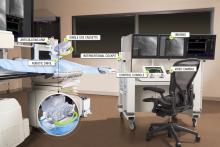
Merge Healthcare, an IBM company, offers award-winning cardiology and hemodynamics solutions that provide a complete view of patient records, access to reporting tools, and integrate with the largest health information systems to enable interoperable image exchange. At the American College opf Cardiology (ACC) 2016 annual meeting, Merge (booth 20,046) will demonstrate how its cardiology solutions can integrate data collection, inventory control, patient billing, and procedure reporting into a single platform, providing a complete, end-to-end cardiology imaging strategy.

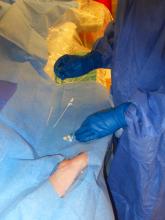
Civco Medical Solutions announced that it has acquired PCI Medical, a market leader in high-level disinfection products for ultrasound transducers. The acquisition equips Civco with a portfolio of hardware and consumables for cost-effective infection control compliance in the ultrasound transducer reprocessing market.

Conventional ultrasound systems too often yield non-diagnostic exams. Recognizing this, GE Healthcare has developed an imaging platform called cSound. It eliminates the conventional ultrasound special-purpose beamforming hardware by using a software beamformer. Data from every probe element/channel is acquired and temporarily stored in a local big data memory before being analyzed and processed by parallel processors, similar to those found in many of today’s supercomputers.

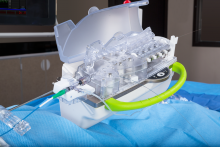
NuCryo Vascular LLC announced the launch of the Next Generation Cryoplasty Inflation device. The device received U.S. Food and Drug Administration (FDA) 510(k) clearance in late 2015 and works in conjunction with the PolarCath Balloon Dilatation System.

V-Wave Ltd, maker of an investigational interatrial shunt device for patients with advanced heart failure (HF), announced the results of its first human implants were published in The Lancet.

Routine mammography, widely recommended for breast cancer screening, may also be a useful tool to identify women at risk for heart disease, according to a study scheduled for presentation at the American College of Cardiology's (ACC) 65th Annual Scientific Session.


Millions of percutaneous coronary interventions (PCIs) are performed each year around the world to treat obstructive coronary artery disease. In order to access the arteries, interventional cardiologists traditionally use the femoral artery, which is still the most common access route for PCI in the United States. However, access via the radial artery is increasingly common. The transradial approach for PCI was developed 23 years ago and is used in more than 50 percent of procedures in most European countries.


Subscribe Now