

News
May 15, 2012 — A hybrid technique that combines coronary stenting with minimally invasive, robotically assisted bypass surgery both reduces the risk of surgical complications and speeds recovery in patients with multiple blockages of the coronary arteries, according to a study presented at the Society for Cardiovascular Angiography and Interventions (SCAI) 2012 Scientific Sessions on May 10.
 May 15, 2012

Feature
The National Heart, Lung and Blood Institute (NHLBI), a division of the National Institutes of Health (NIH), recently awarded a $2.5 million grant to Mayo Clinic’s Cardiorenal Research Laboratory to see if snake venom can improve outcomes of heart attack and heart failure patients.
May 15, 2012
Case Study
Cardiology physician groups and institutions are increasingly being challenged to effectively manage their ambulatory electrocardiography (AECG) and cardiovascular implantable electronic device (CIED) service lines, while the amount of data produced and the requirement for electronic medical record (EMR) integration increases, and reimbursement for the services declines.
May 15, 2012Sponsored Content

Feature | Nuclear Imaging
Cardiac PET/CT represents a major advancement in cardiovascular diagnostics, offering significant clinical and ...
November 12, 2025News
May 15, 2012 — A simple clinical assessment performed in the doctor’s office can identify patients who are at high risk for stroke and other major complications following a procedure to clear blockages from the neck arteries that supply blood to the brain, according to a study presented at the SCAI 2012 Scientific Sessions.
May 15, 2012
News
May 15, 2012 — In a keynote Founders’ Lecture at the Society for Cardiovascular Angiography and Interventions (SCAI) 2012 Scientific Session on May 10, Ted Feldman, M.D., FSCAI, highlighted how percutaneous valve therapies may soon be the accepted treatment for a wide range of patients.
May 15, 2012
Feature | Dave Fornell
Single photon emission computed tomography (SPECT) remains a well-entrenched imaging modality for nuclear myocardial perfusion imaging (MPI) more than 30 years after its introduction. Due to SPECT’s reliability, cost-effectiveness and the wealth of data showing its clinical validation, it remains more common in MPI than its competition, positron emission tomography (PET).
May 15, 2012Sponsored Content
Feature
SPONSORED CONTENT — Studycast is a comprehensive imaging workflow system that allows healthcare professionals to work ...
June 17, 2025
Feature
May 15, 2012 – St. Jude Medical Inc., a global medical device company, announced CE mark approval and launch of its EnligHTN renal denervation system during EuroPCR. Renal denervation is a specialized ablation procedure that has been clinically proven to reduce blood pressure in patients with hypertension, or high blood pressure, that is resistant to medical therapy.
May 15, 2012
Feature | Dave Fornell
Hardware and software advances are enabling echocardiography to greatly expand its capability with increased quantification accuracy, ease-of-use, increased workflow efficiencies and wider use outside of echo labs. Today, cardiovascular ultrasound systems are being integrated into point-of-care for triage, and in operating rooms and cath labs for procedural guidance to cut the use of contrast and ionizing radiation.
May 15, 2012
Feature
May 15, 2012 — Reaching out to patients with a few simple phone calls significantly improves the likelihood they’ll continue to take critically important medication that keeps blood clots from clogging a new stent, according to a study presented today at the SCAI 2012 Scientific Sessions.
May 15, 2012Sponsored Content

Feature | Information Technology
Providing exceptional cardiovascular care for patients to achieve the best possible outcomes is the number one goal for ...
March 21, 2024
Feature | Dave Fornell
As an editor for DAIC and Imaging Technology News, I am a third-party observer in the cardiac and radiology markets. I also am a patient who recently received medical imaging. With both these sets of experience, I am of the opinion that physicians often miss an opportunity to connect with their patients in a critical way, one which could increase patient involvement and compliance for treatments and follow-up exams.
May 15, 2012
Feature | Dave Fornell
Two next-generation automated contrast injector systems were recently introduced in the United States.
May 15, 2012
Feature | Rohan Panda, Frost & Sullivan Healthcare Research Associate
Medical devices employed for injecting radio-opaque contrast media into the body to enhance the visibility of tissues for a medical imaging procedure are known as contrast injectors. Over the years, with ever-increasing technological sophistication, these contrast injectors have evolved from manual injectors having manifolds with stop-cocks to automated versions, providing added accuracy and advantages. These automated versions are known as autoinjectors. Autoinjectors are capable of controlling the amount of contrast media injected, utilization rate, and are also able to increase dosage to keep pace with fast medical imaging scanners as well as alert the physician of potential hazards, such as air embolisms or extravasations.
May 15, 2012Sponsored Content

Feature | Cardiac Imaging
Cardiac positron emission tomography (PET) is growing in popularity among cardiologists because it provides the ability ...
March 05, 2024
Feature | Angiography | Mark Michael, M.D., and Jeffrey A. Breall, M.D., Ph.D.
Contrast-induced nephropathy (CIN) is a significant problem resulting from the use of iodine contrast agents in computed tomography (CT) scans and cath lab angiography. It can have a negative impact on mortality. This article outlines some of the key information on the agents themselves, possible methods of action and how to prevent and treat CIN.
May 15, 2012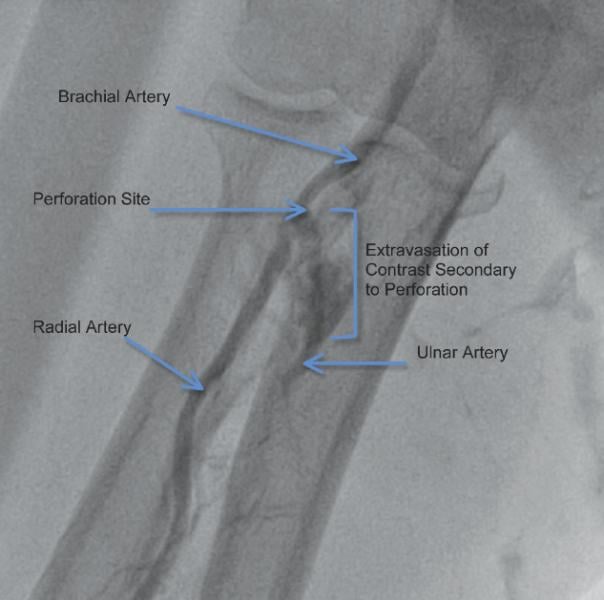
Feature | Radial Access | Asim R. Zaidi, M.D., Mladen I. Vidovich, M.D., Adhir R. Shroff, M.D., and Bernadette Speiser, MSN, CCRN
The radial artery approach is exceptionally well-suited for diagnostic angiography and, with a lower incidence of bleeding complications, is a favorable alternative for femoral percutaneous coronary intervention (PCI). The most common complications with the transradial approach are asymptomatic radial artery occlusion (3-5 percent) and radial artery perforation (less than 1 percent).
May 15, 2012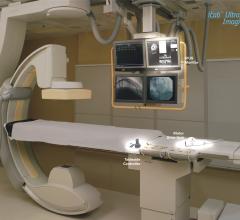
Technology
May 15, 2012 — Boston Scientific Corp. and Philips Healthcare announced a collaboration enabling Philips to sell Boston Scientific Imaging equipment in connection with its Allura Xper catheterization lab systems in territories worldwide.
May 15, 2012