
Women's heart health continues to grow as an awareness topic among the general public, and behind the scenes physicians and medical companies are working furiously not only to determine the difference between male and female cardiology, but to find better ways to prevent, diagnose and treat cardiac disease.

According to the American Heart Association, almost twice as many women in the U.S. die of heart disease and stroke than all forms of cancer combined.


As costs continue to soar for the medical community, health professionals are looking for ways to save money while not jeopardizing the quality of the healthcare they deliver to patients.
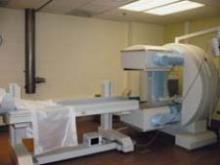
One way medical centers and hospitals can keep costs down is through the purchase and application of refurbished imaging equipment.
Major equipment manufacturers, such as Siemens Medical Solutions, GE Healthcare and Phillips Medical Systems, are all in the business of refurbishing equipment for resale and reuse.


I only just heard the term “positive remodeling” for the first time last fall, and I assumed it was something, well, positive, like a self-mending process of some sort. But in the cardiac context of arterial remodeling, which refers to the build-up of plaque in the coronary arteries, positive remodeling is the worse of two types.


It’s like a never-ending battle — that’s how Lena Napolitano, M.D., describes the recent and sharp rise in nosocomial methicillin-resistant Staphylococcus aureus (MRSA) infections.
The professor in the department of surgery at the University of Michigan said MRSA is now the most frequent cause of hospital-acquired pneumonia and surgical wound infections, as well as the most common gram-positive bacteria in hospitals today.


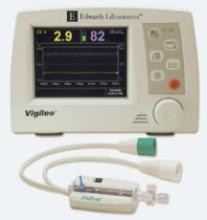
Blood pressure measurement is a given for patients in the hospital, but for surgical or critically ill patients — in operating rooms, surgical recovery rooms, intensive care units, emergency departments and other critical care areas — frequent or continual blood pressure is imperative.


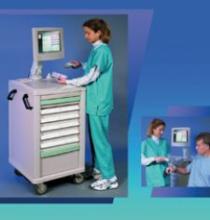
Intensive care units are highly dependent on the efficient transfer of physiological data to multiple healthcare providers. In the delivery of healthcare in 2006 there exists a strong rationale for a tight relationship between critical care and information technology (Celi, Hassan, Marquardt, Breslow, & Rosenfeld, 2001).


Electronic medical information improves patient safety by providing immediate and complete access to complex patient information. Having access to information reduces medical errors — yet three decades have elapsed since the electronic medical record (EMR) was first conceived and 16 years have passed since the Institute of Medicine's report called for EMRs.
But time isn’t the only thing littering the long road to EMR.


Technological advancements over the years have forced most OR methods used in 1964 into dusty, old history books and museums.
But there’s one test that is still the most widely used in hemostasis management — one that monitors high-dose heparin during surgeries that require intense anticoagulation measures, keeping patients balanced on the fine line between thrombosis and hemorrhage.
And according to Marcia Zucker, Ph.D., the Activated Clotting Time (ACT) test — despite its old age and unpredictability — will become obsolete before it gets changed.


DAIC: What are some of the scenarios — decisions or investments — in which a hospital might want to
consider doing a simulation model first?
Rainer Dronzek: It can really span from upfront in the facility design to when they are actually designing the processes that go into the facility — then there is the actual operational aspect. In many cases we get called because there is a bottleneck or a specific problem to solve.


Subscribe Now