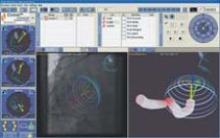
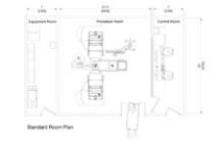
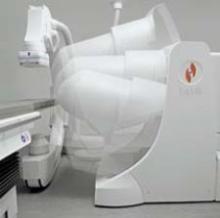
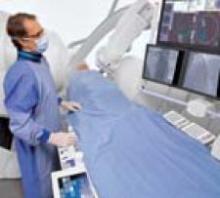
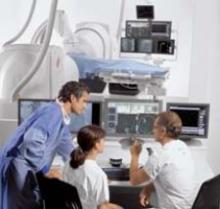
Magnetic navigation technology to direct and digitally control catheter and guidewire devices along complex paths within the heart and coronary vasculature has been evolving since 1990, and magnetic navigation was first employed in a cardiac clinical trial in early 2001 at Barnes-Jewish Hospital in St. Louis.
But in 2003, magnetic navigation really began to come of age and is now being used in more than 40 cardiac cath labs worldwide for both electrophysiological and intracoronary applications.


It struck me the other day that while thousands of healthcare information technology (HIT) executives flock to San Diego for the HIMSS 06 annual conference and exhibition, it’s quite conceivable that thousands of cardiologists are unaware of the important meetings and showcased technologies that will comprise the five-day convention beginning Feb. 12.


Ah, money, money, money — the Frankenstein monster that destroys souls.”
It’s one of many oddball lines from the zany 1930s Carole Lombard and William Powell comedy, “My Man Godfrey,” but it rings true for physicians and other clinicians who know all too well how money has often got healthcare by the throat.


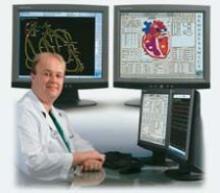
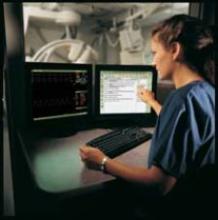
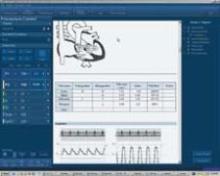
A trend is emerging in cardiovascular image and information systems designed for the cath lab and was apparent on the exhibit floor of ACC.06, the 55th Annual Scientific Sessions of the American College of Cardiology, in March.


Give a highly ranked research and teaching facility access to cutting-edge technology, and the results could be death defying.
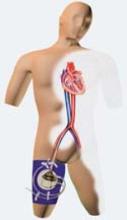
At least that’s true for the Texas Heart Institute (THI) of St. Luke’s Episcopal Hospital (Houston, TX) and its research with the latest in percutaneous left ventricular assist devices.
Mortality rates have been cut by as much as 80 percent nationwide with the TandemHeart PTVA (CardiacAssist Inc., Pittsburgh, PA), making its predecessor obsolete, according to THI cardiologist and heart failure specialist Reynolds M. Delgado, M.D.


Are drug-eluting stents destined to fail?
In Part 1 of this investigation, the connection of DES and thrombogenicity was raised, and this perplexing drawback was explored, in part, through the views of 2005 ACC presenter Renue Virmani, M.D., FACC, medical director at CVPath. She asserts that the culprit in DES-related thrombosis is likely the polymer rather than the drug contained in the DES, which then begs the question: Can the amount of drug and polymer applied to stents be reduced?
Innovative approaches may be called for.


Minimally-invasive surgery has proven to be safer, requires a shorter hospital stay and is cosmetically preferred over conventional surgery because the incisions are much smaller.
But while procedures such as a laparoscopic cholecystectomy (gall bladder removal) have become commonplace since the 1980s, cardiothoracic surgeons have largely relied on traditional methods, not the least of which is cracking open a patient's chest in order to fully expose the heart.


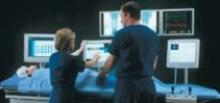
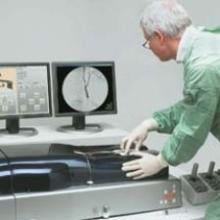
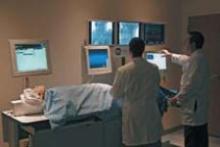
What do you think of when you hear the word simulation? Probably the first thing that comes to mind is flight simulation, where pilots and pilots-in-training learn how to fly. Simulation has been used over the years, most recognizably, for flight and combat; however, a new area in which simulation technology has taken hold is medicine.


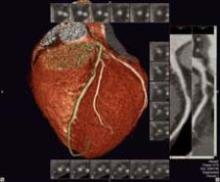
In the microscopic world of arterial plaque, the only positive thing about positive remodeling is that physicians can visualize it — now noninvasively with multislice detector computed tomography (MDCT) — and treat it before it strikes with deadly force. But early detection of positively remodeled plaque, or the atherosclerotic thickening of vessel walls with outward expansion, is the ongoing challenge cardiologists face, even as 1.2 million Americans suffer a new or recurrent coronary attack each year.


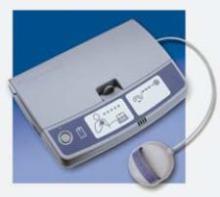
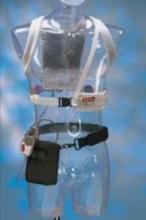
One of the highest priorities for physicians who diagnose and treat heart failure conditions is to keep their patients stable and out of the hospital. To accomplish this, they choose from a wide variety of event monitoring devices that serve specific purposes and enable doctors to skillfully embark on a well-navigated journey of therapy.


Subscribe Now