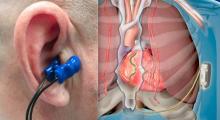
April 3, 2019 – The ACC.19 late-breaking landmark Evolut Low Risk Trial compared the minimally invasive Evolut transcatheter aortic valve replacement (TAVR) system to the gold standard of open-heart surgery in characteristically younger, healthier aortic stenosis patients. The randomized trial, which met its primary non-inferiority endpoint of all-cause mortality or disabling stroke at two years compared to surgery (5.3 vs.

April 3, 2019 — The U.S. Food and Drug Administration (FDA) recently granted an additional indication to Bard Peripheral Vascular's Covera Vascular Covered Stent for the treatment of a stenosis or blockage which has developed anywhere in the access circuit of patients on hemodialysis using an arteriovenous (AV) fistula.

The device was previously approved for use in the treatment of stenoses at the venous anastomosis of ePTFE or other synthetic arterio-venous (AV) access grafts only. 

April 3, 2019 — The U.S. Food and Drug Administration (FDA) recently cleared Bard Peripheral Vascular's Venovo Venous Stent System intended to treat narrowed iliofemoral veins. 

April 3, 2019 — Essential Medical Inc. received U.S. Food and Drug Administration (FDA) clearance for its large bore Manta Vascular Closure Device. It is designed to close large puncture sites in the femoral artery from larger sized transcatheter devices, including the Impella heart pump, endovascular stent grafts and transcatheter valves. 

April 3, 2019 — Medtronic's Resolute Integrity Zotarolimus-eluting Coronary Stent System received an additional U.S. Food and Drug Administration (FDA) indication for treatment of de novo chronic total occlusion (CTO) lesions. The stent is also indicated for improving coronary luminal diameters in patients, including those with diabetes mellitus, with symptomatic ischemic heart disease due to de novo lesions of length ≤ 35 mm in native coronary arteries with reference vessel diameters of 2.25 - 4.2 mm. 

U.S. Food and Drug Administration (FDA) Commissioner Scott Gottlieb, M.D., announced Tuesday the agency is pursuing a new framework in which to review artificial intelligence (AI)-based medical software and devices to ensure ongoing effectiveness and patient safety. The agency released a 20-page discussion paper explaining the need for a new framework, the tenets of a total product lifecycle (TPLC) approach to certification, and examples of potential real-world AI software modifications that may or may not be permitted under the proposed framework. The FDA is asking for comments and feedback from all parties to inform future decisions.

Medical imaging and visualization company Medivis announced the launch of AnatomyX, its augmented reality (AR) platform for anatomy education. Currently enabled on Microsoft's HoloLens AR technology and Magic Leap's spatial computing device, Magic Leap One, AnatomyX offers any member of a large university or medical institution an enterprise-grade learning platform for the study of human anatomy, physiology and pathology.

April 2, 2019 — A Swedish review of out-of-hospital cardiac arrest data shows rates of bystander cardiopulmonary resuscitation (CPR) nearly doubled, and compression-only (or Hands-Only CPR) increased six-fold over an 18-year period.


April 1, 2019 — Here is a checklist of dose-sparing practices for coronary computed tomography angiography (CCTA) imaging. This list was included in a new 2018 consensus document to guide the optimal use of ionizing radiation in cardiovascular imaging.[1] 
 

Subscribe Now