
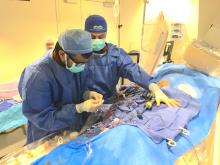
June 6, 2018 — Here is a checklist of dose-sparing practices for angiographic X-ray imaging used in the cath lab. This list was included in a new 2018 consensus document to guide the optimal use of ionizing radiation in cardiovascular imaging.[1] 

June 5, 2018 — The U.S. Food and Drug Administration (FDA) has cleared the Biograph Vision, a new positron emission tomography/computed tomography (PET-CT) system from Siemens Healthineers. The system offers new technologies to help improve image quality with motion management, improved delineation and quantification of small lesions, and new detector technology.

June 5, 2018 — Philips Healthcare has signed an agreement to acquire EPD Solutions, a provider of image-guidance in catheter ablation procedures for cardiac arrhythmias, for $292 million Euros. EPD’s cardiac imaging and navigation system helps electrophysiologists (EPs) navigate the heart by generating a detailed 3-D image of the cardiac anatomy, while also pinpointing the location and orientation of catheters during the diagnostic and therapeutic procedures for cardiac arrhythmias.


June 5, 2018 — The future of cardiovascular care will be transformed by advances in artificial intelligence, digital health technology and mobile devices as a means to prevent and treat heart disease, according to several articles published June 4, 2018 in a Journal of the American College of Cardiology Focus Seminar on the Future Technology of Cardiovascular Care.

The Use of Artificial Intelligence in Cardiology


June 4, 2018 — The U.S. Food and Drug Administration said Medtronic initiated a Class 1 recall all 204,017 of its HeartWare Ventricular Assist Devices (HVAD) produced between March 2006 to May 2018. 


A new consensus document on how to mitigate radiation exposure in cardiac imaging for both patients and staff was issued in May, and it advocates for greater use of radiation dose monitoring technologies.[1] The "2018 ACC/HRS/NASCI/SCAI/SNMMI/SCCT Expert Consensus Document on Optimal Use of Ionizing Radiation in Cardiovascular Imaging: Best Practices for Safety and Effectiveness" was issued jointly by


June 1, 2018 –  Use of the Abbott Portico transcatheter aortic valve replacement (TAVR) therapy was associated with excellent clinical outcomes at 30 days, including low rates of death, disabling stroke and paravalvular leak. This was based on data from the PORTICO I study presented during EuroPCR 2018. 

The U.S. Food and Drug Administration (FDA) is issuing a proposed order to reclassify certain radiological medical image analyzers, or computer-aided detection (CAD) devices, from class III to class II devices. This includes CAD devices for mammography breast cancer, ultrasound breast lesions and radiograph lung nodules.


June 1, 2018 — Here is the list of the most popular content on the Diagnostic and Interventional Cardiology (DAIC) magazine website from the month of May 2018. This is based on website analytics of the month’s record 204,441 pageviews:

1. FDA Clears First Reversal Agent for Rivaroxaban, Apixaban Anticoagulants


ReCor Medical announced that the RADIANCE-HTN SOLO study met its primary efficacy endpoint and demonstrated a statistically significant reduction in blood pressure in hypertensive patients. In addition, the company announced submission of an investigational device exemption (IDE) supplement to the U.S. Food and Drug Administration (FDA) for a pivotal study of its Paradise System for the treatment of hypertension. Prof. Ajay Kirtane, M.D., of New York-Presbyterian Hospital/Columbia University has taken the role of co-principal investigator for RADIANCE-HTN.

Subscribe Now
