
This video, provided in partnership with the American Society of Echocardiography (ASE), is titled "Strain Fundamentals Made Easy - Strain in Routine clinical Practice: Knobology and Beyond." It is presented by Teerapat Yingchocharoen, M.D., FASE, from Ramathibodi Hospital, Mahidol University, Bangkok, Thailand. He is also a co-director of the Echo ASE ASEAN conference. This is one of the sessions presented at the ASE 2016 annual scientific sessions, one of the premier meetings for cardiac ultrasound education. For more information, visit asescientificsessions.org.
Videos
DAIC Thought Leadership Series: The Importance of Inclusion in Clinical Trials
Cardiovascular Clinical Studies | July 30, 2024
As part of DAIC's continuing Thought Leadership Series, this month Editorial Director Melinda Taschetta-Millane sits down with Philip B. Adamson, MD, MSc, FACC, Chief Medical Officer of CVRx, to talk about health equity — starting at the beginning of clinical trials, and including how medical device manufacturers need a clear roadmap from the get-go to achieve success.
As Chief Medical Officer of CVRx, Dr. Adamson will spearhead efforts to drive awareness and appropriate use of Barostim therapy among clinicians. He will guide comprehensive medical education, outreach and guideline integration initiatives to establish Barostim as the standard of care for patients with heart failure. Dr. Adamson previously was with Abbott Laboratories, where he served as Divisional Vice President and Chief Medical Officer of the Heart Failure division. A renowned expert in heart failure, he has nearly three decades of experience in academia as a professor and as a practicing cardiologist, during which time he authored over 150 manuscripts and book chapters. Dr. Adamson earned his MD with distinction from the University of Oklahoma College of Medicine and MSc in physiology from the University of Oklahoma.
His clinical interests focus on developing more efficient and effective disease management systems for patients with chronic heart failure, specifically focusing on remote monitoring of physiologic signals from implanted devices. He has also served as the principal investigator on the steering committees of several large randomized clinical trials over the past decade.
Related content:
DAIC Thought Leadership Series: Practical Realities of Artificial Intelligence in Echocardiology
DAIC Thought Leadership Series: Collaboration Challenges in Complex Cardiology Settings
Conference Coverage
Leads Implantable Devices | May 25, 2017
Bruce Wilkoff, M.D., director of cardiac pacing and tachyarrhythmia devices at Cleveland Clinic, discusses advancements in lead management technology at the 2017 Heart Rhythm Society (HRS) annual meeting. Read the article “ Study Shows Occlusion Balloon Saves Lives During Lead Extraction.” Read the articles “Advances in Transvenous Lead Extraction,” and “Strategies, New Technologies Aid Lead Management.”
Pacemakers | May 23, 2017

Vivek Reddy, M.D., director of cardiac arrhythmia services and professor of medicine, cardiology, Mount Sinai Hospital, N.Y., discusses advancements in leadless pacemaker technology at the 2017 Heart Rhythm Society (HRS) annual meeting. He explains the pros and cons of leadless pacemaker technology as it stands today. One of the issues is that leadless pacing is currently limited to single chamber pacing, while most patients require dual chamber pacing. Reddy discusses the technology that currently has U.S. FDA market clearance, the Medtronic Micra, and new technologies in development to overcome the limitations the Micra.
Read the related articles “Leadless Endocardial CRT Pacing Effective for Heart Failure Patients,” and “New Data Showcases Long-term Benefits of Nanostim Leadless Pacemaker.”
Cardiac Resynchronization Therapy Devices (CRT) | May 23, 2017
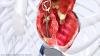
This video, provided by ERB, demonstrates the function and implantation of the WiSE CRT (Wireless Stimulation Endocardially for cardiac resynchronization therapy) leadless CRT pacing system for heart failure patients. Read the article “Leadless Endocardial CRT Pacing Effective for Heart Failure Patients.”
Atrial Fibrillation | May 17, 2017
Hugh Calkins, M.D., FACC, FAHA, FHRS, director of cardiac arrhythmia services and professor of medicine at Johns Hopkins Hospital, discusses advancements in AF ablation at the 2017 Heart Rhythm Society (HRS) annual meeting. Read about the new AF expert consensus statement released at HRS 2017.
Related Content:
VIDEO: Current State of Atrial Fibrillation Ablation Technologies — Interview with Hugh Calkins, M.D.,
New Technologies to Improve Atrial Fibrillation Ablation
Landmark CABANA Trial Confirms Ablation Equal To or Superior to Drug Therapy
VIDEO: Cryoballoon Ablation Best Practice Guidelines — Wilber Su, M.D.
EP Lab | May 17, 2017

This video, provided by Spectranetics, demonstrates how to deploy the Bridge Occlusion Balloon used to seal accidental tears in the superior vena cava (SVC) during EP device lead extraction procedures. A review of post-market release data shown it can bridge the patient to open surgical repair and significantly reduce the usual 50 percent mortality associated with this complication. Read the article about the late-breaking clinical trial presentation from Heart Rhythm 2017.
Pacemakers | May 16, 2017
This video, provided by Medtronic, demonstrates the implantation of Micra transcatheter pacing system (TPS). The device is a leadless pacemaker for single chamber pacing and eliminated the need for a surgical pocket or transvenous leads. The design concept is to simplify pacemaker implantation and eliminate the need for leads, which open the patient up to additional device and infection complications.
Watch the VIDEO “Current State of Leadless Pacemaker Technology,” an interview with Vivek Reddy, M.D., at the Heart Rhythm Society 2017 meeting.
Related Micra Leadless Pacemaker Content:
FDA Clears Medtronic Micra AV to Treat AV Block
New Algorithms in Medtronic Micra Pacemaker May Improve Synchrony and Cardiac Function in AV Block
FDA Approves World's Smallest Pacemaker for U.S. Patients
Safety, Performance of the World's Smallest Pacemaker Reinforced in Real-world Patients
One-Year Results for Micra TPS Pacemaker Trial Presented at ESC 2016
Leadless Pacemaker Gains Medicare Reimbursement
Wireless and Leadless Pacemaker Being Developed by Texas Heart Institute With Federal Grant
Cardiovascular Business | May 03, 2017

Kim A. Williams, Sr., M.D., chief of cardiology at Rush University Medical Center, Chicago and former president of both the American College of Cardiology (ACC) and the American Society of Nuclear Cardiology (ASNC), explains the impact of healthcare reform on cardiology and specifically on nuclear perfusion imaging. Read the article "HHS Finalizes Cardiology Bundled Payment Model to Lower Healthcare Costs."
Angiography | May 03, 2017

Tom Kloetzly, sales and marketing VP for Shimadzu Medical Systems USA, explains the evolution of Shimadzu Corporation since its founding 142 years ago. Kloetzly focuses on the Trinias Interventional X-ray line shown at RSNA 2016. Kloetzly states “A key feature of Trinias, is the ability to image from fingertip to fingertip during a transradial approach which makes for much shorter hospital stay with the patient up and moving almost immediately after the procedure. Features Like RSM-DSA, a type of motion correction subtraction, eliminates patient movement during acquisition while STENTVIEW, is an enhanced visualization during stent placement in real-time." For more information: www.shimadzu.com/med/products/angio/index.html.
Nuclear Imaging | April 28, 2017
David Wolinsky, M.D., director of nuclear cardiology at Cleveland Clinic Florida and past-president of the American Society of Nuclear Cardiology (ASNC), discusses advancements in nuclear imaging and some of the issues facing the subspecialty.
Read the article “PET vs. SPECT — Will PET Dominate Over the Next Decade?”
6 Trends in Cardiac Nuclear Imaging at the ASNC 2019 Meeting
Ventricular Assist Devices (VAD) | April 14, 2017

A discussion with William O'Neill, M.D., FACC, FSCAI, medical director of the Center for Structural Heart Disease at Henry Ford Hospital, Detroit. He presented a late-breaking study on the outcomes for 15,259 U.S. patients with acute MI in cardiogenic shock supported with the Impella percutenous ventricular assist device. Read more about the Detroit Cardiogenic Shock Initiative.
Analytics Software | April 13, 2017

The shift to value-based payment models requires focused attention on quality and cost. Lumedx’s Cardiovascular Performance Program offers a new approach to managing this transition so hospitals can improve outcomes — and dramatically reduce costs. See how complications reduction, cost-per-case variations and other key metrics delivered in real-time can drive radical change. For more information, visit www.lumedx.com.
EP Lab | April 10, 2017

A discussion with Heart Rhythm Society (HRS) President Michael Gold, M.D., Ph.D., director of cardiology and associate dean at the Medical University of South Carolina (MUSC), at the American College of Cardiology 2017 annual meeting. He discusses advances to treat atrial fibrillation, new ablation and electro mapping technologies and innovations in implantable devices.
Read the article "What is New in Electrophysiology Technologies."
ACC | April 03, 2017
DAIC Editor Dave Fornell takes a tour of some of the interesting new technologies from the vendor booths on the expo floor at the 2017 meeting of the American College of Cardiology (ACC). For key technology trends at ACC.17, watch the VIDEO "Cardiac Technology Trends at ACC.17."
Stents Bioresorbable | March 30, 2017

Stephen Ellis, M.D., professor of medicine and director of interventional cardiology at Cleveland Clinic, discusses the two year outcomes of the ABSORB III trial of Absorb vs. Xience. The late-breaking trial was presented at ACC 2017. Read the article on the ABSORB III results. Watch a VIDEO with Gregg Stone, M.D., "Poor Outcomes for Bioresorbable Stents in Small Coronary Arteries."
Cath Lab | March 28, 2017
MDBuyline analyst Tom Watson shares some of the most important trends in cardiac technology he saw at the 2017 American College of Cardiology (ACC) Scientific Sessions. For a list of late-breaking trials and links to related articles read "ACC 2017 Late-Breaking Trials." Watch a VIDEO of Watson's assessment of trends at ACC.16.
Heart Valve Technology | March 24, 2017
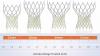
Michael Reardon, M.D., professor of cardiothoracic surgery at Houston Methodist DeBakey Heart and Vascular Center, discusses the positive results of the SURTAVI trial that were presented at ACC.17. Reardon was the principal investigator for the SURTAVI trial. Read the article "TAVR Stands Equal to Surgical Valve Replacement."
FFR Technologies | March 23, 2017

Justin Davies, MBBS, of Imperial College London, and Matthias Götberg, M.D, Ph.D., of Skane University Hospital, detail the positive results of the DEFINE-FLAIR and IFR-SWEDEHEART trials presented at 2017 American College of Cardiology annual meeting.
Related iFR Technology Content:
Easier to Use iFR Equal to Outcomes of FFR in Coronary Lesion Evaluation
How Interventionalists Can Keep From Missing Coronary Stenoses
Updated SCAI Expert Consensus Says Either FFR, iFR Can Be Used
New Technology Directions in Fractional Flow Reserve (FFR)
iFR More Cost-Effective Than FFR in PCI Guidance, DAIC
VIDEO: iFR Found More Cost Effective Over Standard FFR — Interview with Manesh Patel, M.D.
One in Four Patients Have Residual Ischemia Following PCI
Analytics Software | March 15, 2017

Pam Rush, RN, MS, clinical program director, cardiovascular service line, and Craig Strauss, M.D., MPH, medical director, explain how Minneapolis Heart Institute (MHI) achieved significant savings by leveraging analytics software for reductions in patient complications, better vendor negotiations and other areas. Read the article “Advanced Analytics Software for Cardiology.”
Learn more about the different aspects of the structural heart team at Minneapolis Heart Institute in these videos:
VIDEO: Transcatheter Mitral Valve Replacement Planning — Interview with Joao Cavalcante, M.D., director of structural heart CT and cardiac MRI
VIDEO: Conscious Sedation for TAVR Procedures — Interview with Mario Goessl, M.D., Ph.D., director of research and education at the Minneapolis Heart Institute
HIMSS | March 10, 2017
ITN Editor Dave Fornell takes a tour of some of the most innovative new technology that was displayed on the expo floor at the 2017 Healthcare Information and Management Systems Society (HIMSS) annual meeting. The two most significant technology advances are discussed in Fornell's blog "Two Technologies That Offer a Paradigm Shift in Medicine at HIMSS 2017."
Stents Bifurcation | March 06, 2017
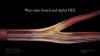
This video, provided by Tryton, demonstrates the implantation of the Tryton Side Branch Stent. It became the first bifurcation stent cleared by the FDA in March 2017. The stent is deployed in the side branch artery using a standard single wire balloon-expandable stent delivery system. A conventional drug eluting stent is then placed in the main vessel. Read the articles "FDA Clears First Dedicated Coronary Bifurcation Stent" and "New Designs May Ease Bifurcation Stenting."
Enterprise Imaging | March 03, 2017
Enterprise imaging system expert Louis Lannum was in charge of Cleveland Clinic's efforts to connect images and other data from 33 of its departments into a single, centralized database that could deliver the content through a viewer in the electronic medical record. He spoke on the key requirements for enterprise imaging systems at HIMSS 2017. Read the article and watch related videos at "RSNA Technology Report 2016: Enterprise Imaging."
Artificial Intelligence | March 01, 2017
Machine learning is now being commercialized in medical imaging products designed to help improve workflow efficiency and augment the clinical user, not replace them. Steve Holloway with the U.K.-based healthcare market intelligence firm Signify Research discussed the expanding roles of artificial intelligence in imaging applications at the 2017 HIMSS healthcare IT conference. Read the article from HIMSS 2017 "How Artificial Intelligence Will Change Medical Imaging."
Heart Failure | February 27, 2017

Ursula Wright, MSN/MBA, FNP-BC, from Mercy Health System, explains how the nation's fifth largest Catholic health system used heart failure pathways and order sets to reduce length of stay and $14 million in costs to treat heart failure patients. Mercy earned the 2016 HIMSS Enterprise Davies Award for its leverage of information technology to impact its clinical outcomes and reduce healthcare costs.
Related Heart Failure Management Content:
3 New Approaches to Reduce Heart Failure Readmissions
Device Technologies to Reduce Heart Failure Readmissions
VIDEO: Population Health to Identify High Risk Cardiovascular Patients
EP Mapping and Imaging Systems | February 01, 2017
This video, provided by Medtronic, demonstrates the CardioInsight electro-anatomical mapping system. It was cleared by the FDA in early 2017. It uses an ECG lead vest to noninvasively create a 3-D electrophysiology (EP) electro-map of the heart to help identify arrhythmia and plan catheter ablation procedures. Read the related article on the technology.
Cardiovascular Ultrasound | January 13, 2017

Detailed imaging is needed to support complex interventions for the assessment and procedure guidance. See how the GE Healthcare cardiovascular ultrasound systems fit into the in Interventional space – from the Vivid E95 with cSound premium system to the Vivid iq compact system. For more information, go to www3.gehealthcare.com/en/products/categories/ultrasound/vivid/vivid_e95.
Cardiac Imaging | January 06, 2017
ITN and DAIC Editor Dave Fornell takes a tour of some of the most innovative new technologies being displayed on the expo floor at the Radiological Society of North America (RSNA) 2016 meeting. For key take away trends at RSNA, watch the video "Key Trends, New Technology at RSNA 2016."
Heart Valve Technology | January 03, 2017
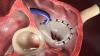
This video, provided by Valtech, demonstrates the Cardioband transcatheter mitral annuloplasty system. It allows transcatheter repair of functional mitral regurgitation (FMR). It has a CE mark in Europe and a study to evaluate its safety and efficacy is planned in the United States. Read the article “Transcatheter Annuloplasty For Repair Versus Replacement in Functional Mitral Regurgitation.”
Radiation Dose Management | December 19, 2016
Mahadevappa Mahesh, MS, Ph.D., chief physicist and professor of radiology and radiological science at Johns Hopkins Hospital, explains the basics of medical imaging dose monitoring technologies. This includes monitoring and recording software meet new Joint Commission requirements, state dose laws and to improve patient safety regarding X-ray radiation exposure. Read the article “The Role of Dose Tracking Systems in Radiation Safety Programs.”
RSNA 2016 | December 19, 2016

A post-game roundup by Imaging Technology News (ITN) Contributing Editor Greg Freiherr and Diagnostic and Interventional Cardiology (DAIC) and ITN Editor Dave Fornell on the trends and new tech seen on the show floor at the Radiological Society of North America (RSNA) 2016 meeting.
Artificial Intelligence | December 19, 2016
At RSNA 2016, the key buzzwords were “deep learning,” “machine learning” and “artificial intelligence.” Vendors and major academic centers are developing a wide array of artificial intelligence neuro networks to aid radiologists in clinical diagnosis and clinical decision support. Here are two examples of how the IBM Watson system examines a mammography and cardiac patient imaging studies. Watch the VIDEO “Development of Artificial Intelligence to Aid Radiology,” an interview with Mark Michalski, M.D., director of the Center for Clinical Data Science at Massachusetts General Hospital, explaining the basis of artificial intelligence in radiology.
Magnetic Resonance Imaging (MRI) | December 19, 2016
Emanuel Kanal, M.D., director of MRI services and professor of radiology and neuroradiology at the University of Pittsburgh Medical Center, explains what is known about MRI contrast retention in the brain and other MRI safety concerns. He spoke to ITN at RSNA 2016. Read the article "Gadolinium May Remain in Brain after Contrast MRI."
Artificial Intelligence | December 19, 2016
Mark Michalski, M.D., director of the Center for Clinical Data Science at Massachusetts General Hospital, explains the basis of the utilization of artificial intelligence (aka deep learning and machine learning) in radiology. He also explains where things are at in development of these neuro networks at RSNA 2016. Watch the VIDEO “Examples of Artificial Intelligence in Medical Imaging Diagnostics.”
Angiography | December 07, 2016
Shimadzu's latest generation interventional lab angiography imaging system, the Trinias, enables advanced imaging capabilities, including reduced patient dose, 3-D rotation angiography acquisitions table side, and stent enhancement software. This video tour of the system was created at the 2016 Transcatheter Cardiovascular Therapeutics (TCT) meeting. For more information: www.shimadzu.com/med/products/angio/index.html.
Robotic Systems | November 22, 2016

Corindus Vascular Robotics received U.S. Food and Drug Administration (FDA) 510(k) clearance for its CorPath GRX, the second generation of its vascular robotic system. The system builds upon the original CorPath platform, adding a significant number of key upgrades that increase precision, improve workflow and extend the capabilities and range of interventional procedures that can be performed robotically. These features include Active Guide Management, which enables control of the guide catheter along with robotic control of the guidewire and balloon or stent catheter, with 1 millimeter advancement, from the Control Console. This precise positioning will enable physicians to adjust guide catheter position during PCI procedures, and may expand use of CorPath to more complex cases. The new system also features a completely redesigned Bedside Unit, featuring an Extended Reach Arm and a touchscreen display to streamline workflow.
The CorPath GRX was displayed for the first time at the Transcatheter Cardiovascular Therapeutics (TCT) 2016 conference. Read more about the FDA approval.
TCT | November 18, 2016
DAIC Editor Dave Fornell takes a video tour of some of the most innovative new interventional cardiology technologies he found at the Transcatheter Cardiovascular Therapeutics (TCT) 2016 meeting. Watch the related VIDEO “Editor's Choice of the Most Innovative New Technologies at TCT 2015.”
Guidewires | November 18, 2016
A discussion with guidewire expert Dimitri Karmpaliotis, M.D., Ph.D., FACC, about the basics of interventional guidewire design and function. He is, assistant professor of medicine, Columbia University Medical Center, and director of chronic total occlusion (CTO), complex and high-risk angioplasty program at the Center for Interventional Vascular Therapy, NewYork Presbyterian Hospital. He spoke with DAIC at the Transcatheter Cardiovascular Therapeutics (TCT) 2016 annual meeting.
Related Interventional Guide Wire Content:
Understanding the Design and Function of Guidewire Technology
Guidewire Product Comparison - create a free login tyo access
The Basics of Guide Wire Technology
Heart Valve Technology | November 18, 2016

A discussion with Juan Granada, M.D., about transcatheter mitral valve advancements and device challenges at the Transcatheter Cardiovascular Therapeutics (TCT) 2016 annual meeting. Granada is executive director and chief scientific officer of the Cardiovascular Research Foundation's Skirball Center for Innovation. There is a big movement toward transcatheter interventions for the mitral valve after the major success of and rapid expansion of transcatheter aortic valve replacement (TAVR) technology. However, he said the mitral valve anatomy is much more complex and it is not as simple as using a TAVR valve in the mitral position.
Related TMVR Content:
VIDEO: Transcatheter Mitral Valve Replacement Planning — Interview with Joao Cavalcante, M.D.
Advances and Future Directions for Transcatheter Valves
Transcatheter Mitral Valve Replacement Devices in Development
Interventional Imagers: The Conductors of the Heart Team Orchestra
VIDEO: The Importance of the Neo-LVOT in Transcatheter Mitral Valve Replacement — Interview with Dee Dee Wang, M.D.
VIDEO: Transcatheter Structural Heart Procedure Navigation Technology Advances — Interview with Stephen Little, M.D.
Recent Advances in Transcatheter Valve Technology
Abbott Begins Tendyne Transcatheter Mitral Valve U.S. Pivotal Trial
VIDEO: The Essentials of CT Transcatheter Valve Imaging — Interview with Jonathon Leipsic, M.D.,
New LAMPOON Technique Reduces LVOT Obstruction in Transcatheter Mitral Valve Replacement
Heart Valve Technology | November 18, 2016
A discussion with Torsten Vahl, M.D., about advancements in transcatheter valve repair technology, including new devices for the aortic, mitral and tricuspid valves. Vahl is director of experimental and translational research and assistant professor of medicine, Columbia University Medical Center, Center for Interventional Vascular Therapy. The interview took place at the Transcatheter Cardiovascular Therapeutics (TCT) 2016 annual meeting.
Watch an updated 2019 interview with Vahl in the VIDEO: The Expansion of TAVR Following the FDA Clearing its Use in All Patients.
Related Transcatheter Valve Content:
Advances and Future Directions for Transcatheter Valves
Transcatheter Mitral Valve Replacement Devices in Development
Advances in Transcatheter Tricuspid Valve Technologies
VIDEO: Update of Mitral Valve Repair and Replacement Technologies at TCT 2017 — Interview with Ted Feldman, M.D.,
TAVR Operator and Hospital Requirements Outlined in 2018 AATS/ACC/SCAI/STS Expert Consensus
VIDEO: Tricuspid Device Clinical Trial Overview — Interview with Ori Ben-Yehuda, M.D.
Recent Advances in Transcatheter Valve Technology
VIDEO: Tricuspid Valve Imaging and Interventions Developing Hand-in-hand at ASE 2018— Interview with Rebecca Hahn, M.D.
Hospital Consolidation May Increase Access to TAVR, New Cardiac Technologies
VIDEO: TAVR for Degenerated Surgical Valves - 2017 Update— Valve-in-Valve TAVR Procedures — Interview with Sammy Elmariah, M.D.
How to Perform Transcaval TAVR Access
VIDEO: The Essentials of CT Transcatheter Valve Imaging — Interview with Jonathon Leipsic, M.D.
Advances in Heart Valve Technology in 2017
VIDEO: TAVR For Asymptomatic Severe Aortic Stenosis — Interview with Philippe Genereux, M.D.
VIDEO: Conscious Sedation for TAVR Procedures — Interview with Mario Goessl, M.D.
VIDEO: Overview of the Henry Ford Hospital Structural Heart Program
CT Angiography (CTA) | November 18, 2016
A discussion with Simon Dixon, M.D., MBChB, on the use of fractional flow reserve-computed tomography (FFR-CT) to evaluate chest pain patients in the emergency department. He is chairman of the Department of Cardiovascular Medicine at Beaumont Health System and a professor of Medicine at the Oakland University William Beaumont School of Medicine. He discussed the first year of experience with FFR-CT at Beaumont Hospital in Royal Oak, Mich., during the Transcatheter Cardiovascular Therapeutics (TCT) 2016 annual meeting. Read the article “Clinical Applications of FFR-CT.”
